
Klasični razgovori sa umetnicima.
Perspektive umetnika: priče iza nota. Razgovori o nadahnuću, stvaranju i umetničkim putevima.

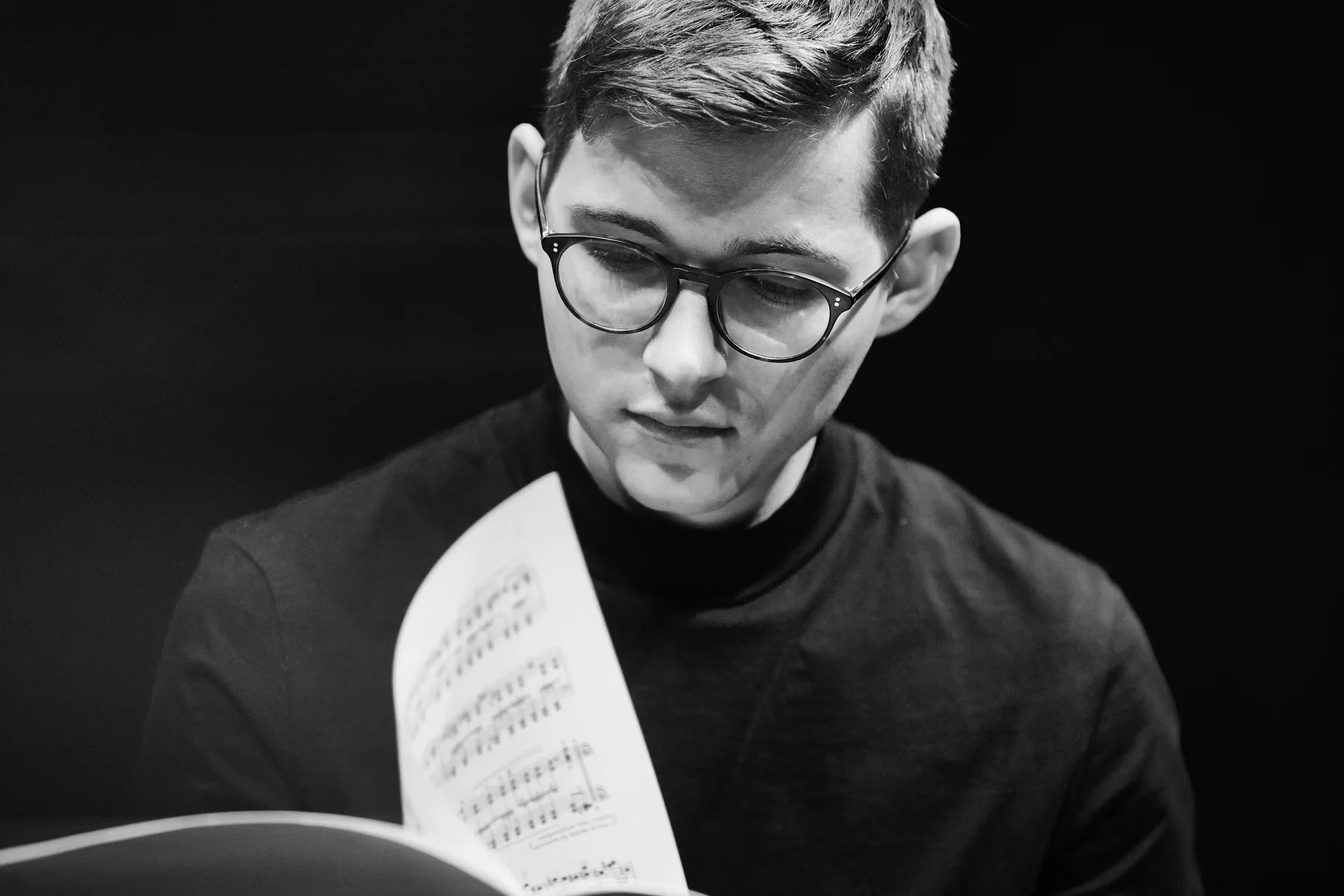
Jérémie Conus: I believe the most important thing is to remain authentic
Jérémy Conus is a multiple award-winning pianist whose interpretations have earned acclaim from both audiences and critics. His repertoire uniquely combines well-known masterpieces with works that are still waiting to be discovered by a wider public.
Interview with pianist Jérémie Conus on the occasion of his participation in the Three Days of Piano festival at the Guarnerius Art Centre.
Verzija intervjua na srpskom jeziku nalazi se na ovom LINKU.
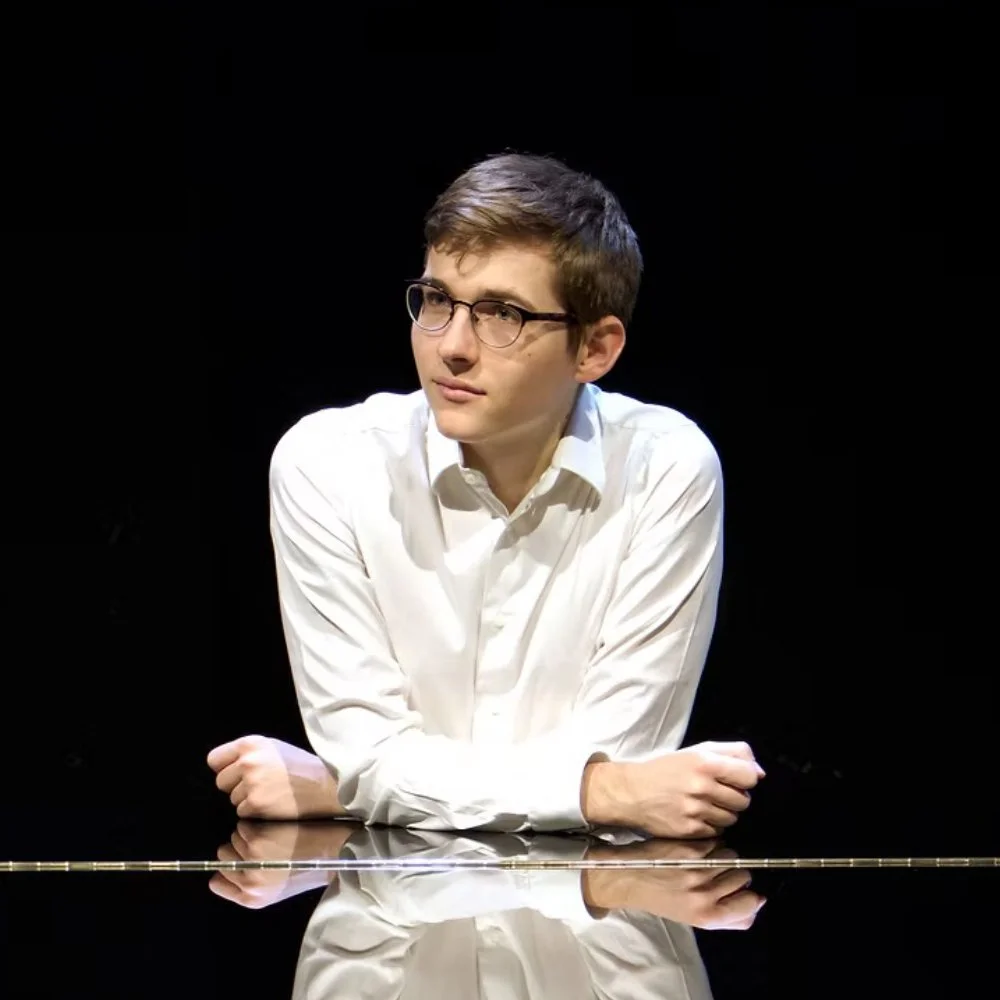
Jérémie Conus
Photo: Fotografija: Natalija BajovićI met pianist Jérémie Conus at the Three Days of Piano festival, which took place at the Guarnerius Cultural Center from May 8 to 10.
As part of the festival, Jérémie gave an outstanding recital featuring a program that moved between Impressionistic sensibility, classical pianistic architecture, and contemporary reflections of Swiss musical literature.
Artistic identity is also about having the courage to try new formats.
In addition to his performance, he led several workshops with young pianists and delivered a lecture on how contemporary musicians can distinguish themselves in today’s musical landscape. The seminar was dedicated to the process of artistic self-definition for young musicians, with a particular focus on the creative design of concert programs and the development of an individual approach to performance.
Jérémie Conus is a multiple award-winning pianist whose interpretations have earned acclaim from both audiences and critics. His repertoire uniquely combines well-known masterpieces with works that are still waiting to be discovered by a wider public.
Courage to go beyond
How does it feel to take part in a festival where you are present not only as a performer, but also as a pedagogical speaker?
It is very good. I have never been part of a festival like this before. From the very beginning, I thought it was a great idea and a very strong initiative, and now that I can look back on these three days, I can say it was something special.
It was also very meaningful for the young people who came here, who hopefully learned a lot – not only by listening to us perform, but also through direct contact with us and the possibility to ask questions, including very practical ones about careers or more general musical topics. I feel honored to have been part of it.
Your seminar topic, Between Repertoire and Identity: How Does the Contemporary Musician Stand Out?, raises important questions about artistic individuality today. How do you personally define a musician’s artistic identity in an increasingly competitive and globalized musical world?
I would say artistic identity consists of several aspects, but one of the most important is the repertoire a musician chooses.
For example, I find it meaningful when young musicians have the courage to go beyond the standard repertoire and explore music they may not have encountered before – composers and works that are less known.
Artistic identity is also about having the courage to try new formats, not only performing pieces but sometimes also engaging with the audience in other ways, such as speaking or presenting. In today’s world, where there are so many musicians and so much accessibility through the internet and social media, I think it is increasingly important to have a clear artistic profile – something that makes you stand out.
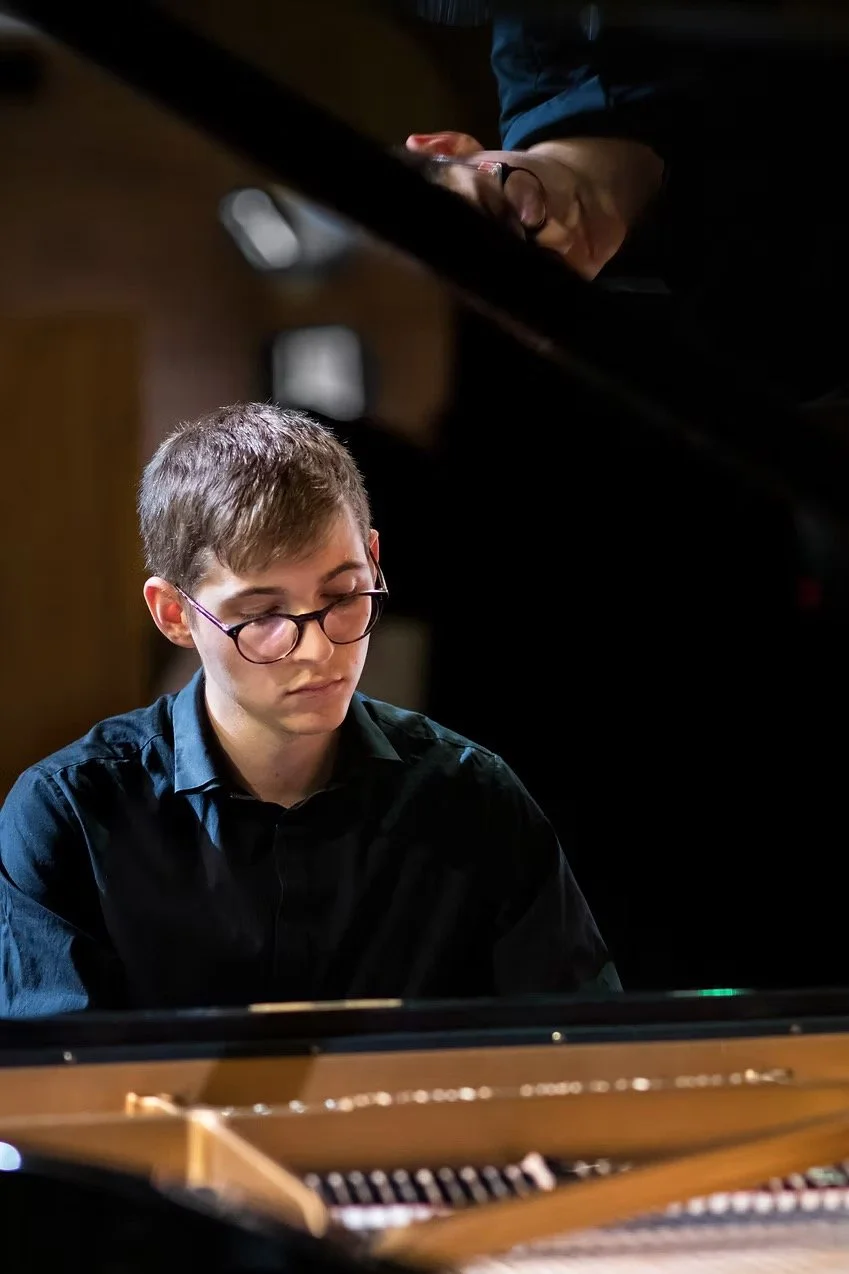
Photo: Art Dialog FestivalDiscovering new music
Your repertoire combines canonical piano literature with lesser-known works, particularly by Swiss composers such as Frank Martin and Arthur Honegger. What motivates your commitment to expanding traditional repertoire choices?
I often notice that audiences are very grateful when they can discover something new. After concerts, people sometimes come to me and say that they enjoyed the music, especially because they did not know it beforehand and were introduced to something new.
For me, this is a kind of mission: to share music that I personally love.
I first discovered this repertoire myself when I was younger, during a school project where I explored Swiss music. I was surprised by the quality of many composers, especially figures such as Frank Martin or Arthur Honegger, who I believe deserve to stand alongside the great canonical composers like Beethoven.
At the same time, I still deeply love performing the major masters of the repertoire. My goal is to combine well-known works with lesser-known pieces, and in my experience, this combination works very well in concert.
I often notice that audiences are very grateful when they can discover something new.
〰️
I often notice that audiences are very grateful when they can discover something new. 〰️
You have enjoyed success in numerous prestigious competitions. In your opinion, how important are competitions in shaping a young musician’s career, and what are their limitations?
Competitions are very important at the beginning. Every young musician should experience them to learn how to prepare a large program and how to handle the pressure and discomfort they can bring. They are also valuable for meeting other musicians, competitors, and jury members.
However, at a certain point – especially at university level – I think musicians should reflect on whether competitions are truly right for them. If someone enjoys and excels in the kind of repertoire that works well in competitions, then I would encourage them to continue. But if not, it may be better to focus on other artistic paths.
In my own case, I realized that competition repertoire and the competition environment were not my main interest. I was more drawn to alternative repertoire, and I also felt that my strengths were not necessarily those that are rewarded in competitions, especially when performing the same standard works as many other pianists.
Today, there are many ways to build a career beyond competitions, so I think it is important to approach this topic individually and realistically. Competitions can be useful, but they are not the only path.
Challenges facing young pianists
In your workshop and seminar, what are the most important challenges facing young pianists today as they seek to distinguish themselves artistically?
The main topic was again how to stand out artistically. This also includes the challenge of moving beyond a national or regional context, since many young musicians already have a strong level and perform locally, for example in Serbia or Belgrade.
The question is how to go further and build a broader artistic profile. I encouraged them to continue developing a clear artistic identity – something that offers organizers a distinctive concept. Festivals are often open to new ideas, especially when there is a clear artistic vision, for example combining Beethoven with contemporary music or other original programming ideas.
This kind of artistic clarity is what helps musicians move beyond standard expectations and develop a more individual path.
Photo: Janosch AbelIn an era where musicians are often expected to build recognizable public profiles beyond the stage, how do you view the relationship between artistic substance and professional visibility?
This is a very tricky topic. I believe the most important thing is to remain authentic. Audiences generally recognize and appreciate authenticity.
Of course, visibility is important today. Having a good media presence, recordings, photos, and promotional material is part of a modern career. However, this should never become the focus. The essence must always remain the music.
With social media today, it is easy to fall into the trap of prioritizing content creation over artistic depth. Some people successfully build a large online presence, but their artistic substance can sometimes suffer as a result.
So, I would say: visibility is necessary, but it should always remain secondary to artistic integrity. If someone wants to pursue a different path – becoming an influencer, for example – that is also a valid choice, but it is then a fundamentally different kind of career. For a musician, however, the core must always remain the music itself.
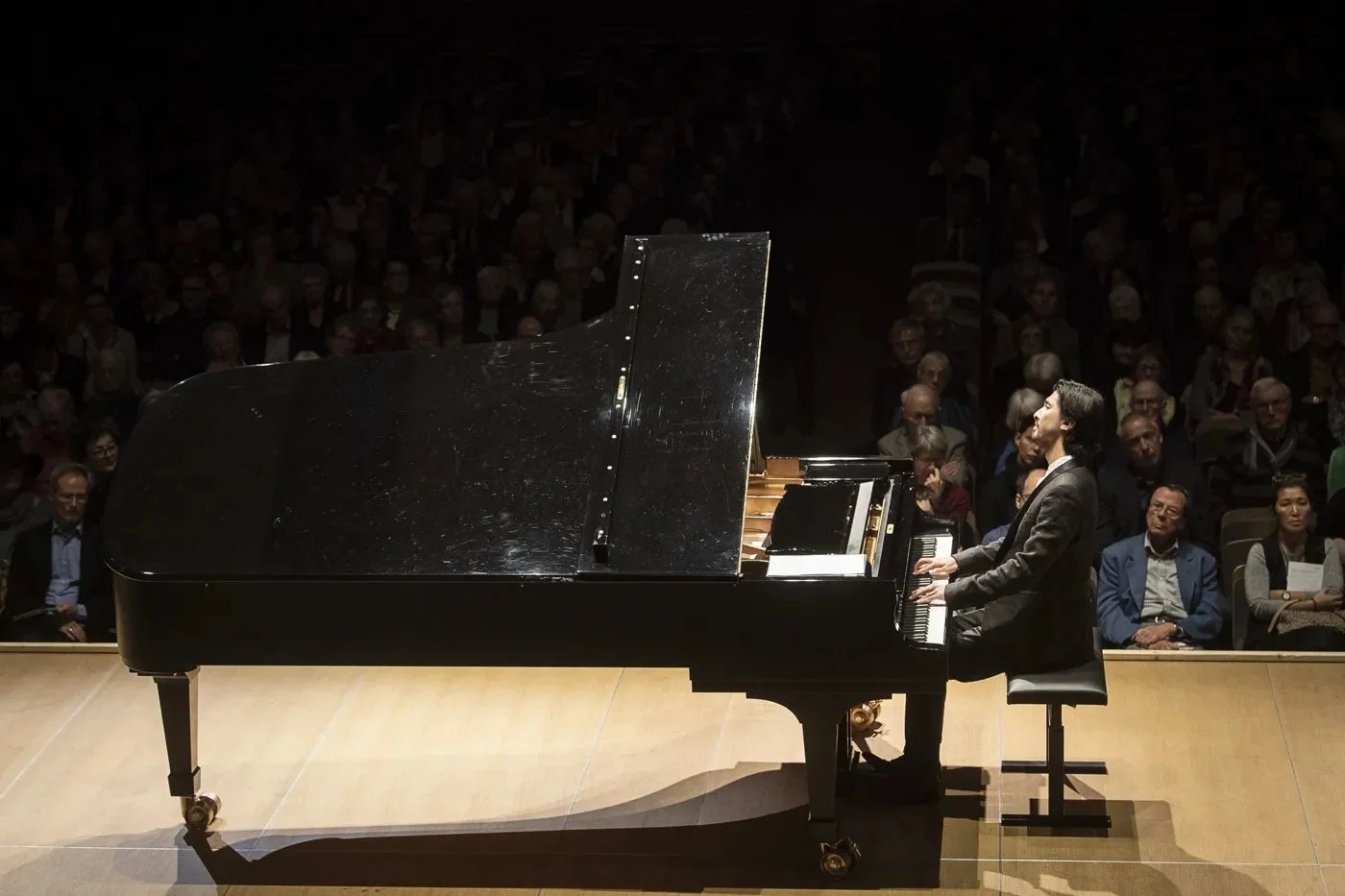
Richard Octaviano Kogima: Music as a Single Language – Between Piano, Conducting, and Composition
Pianist, conductor, and composer Richard Octaviano Kojima speaks about his participation in the Three Days of Piano festival, as well as about various aspects of his artistic activity, which equally encompass performance and education. In this interview, he also shares his reflections on music, as well as on the artistic experiences he has gained so far.
Interview with pianist, conductor, and composer Richard Octaviano Kogima on the occasion of his participation in the Three Days of Piano festival at the Guarnerius Art Centre.
Verzija intervjua na srpskom jeziku nalazi se na ovom LINKU.
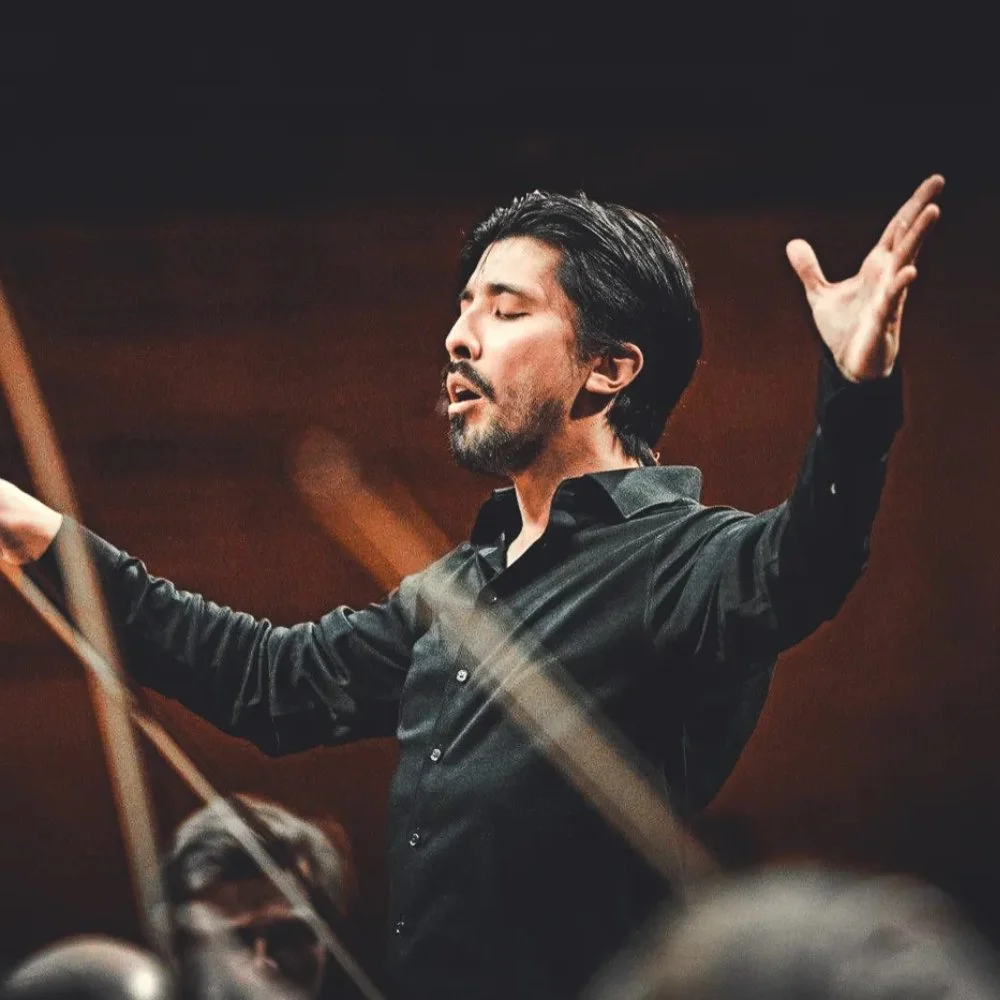
Photo: Agnete SchlichtkrullI met Richard Octaviano Kogima at the Three Days of Piano festival, held from May 8 to 10 at the Guarnerius Art Centre in Belgrade. During the festival, Richard gave an outstanding concert featuring a diverse and carefully curated program, leaving a strong impression on the audience and confirming his versatility as a performer.
In addition to his concert appearance, Richard led conducting workshops and held sessions with young pianists, during which he engaged in open conversations about musical expression, interpretation, and artistic development. His approach to working with young musicians is marked by directness, attentiveness, and a deep understanding of their artistic needs.
His versatility, intellect, and broad musical education make him an exceptionally open and inquisitive artist. Richard kindly agreed to speak for my blog not only about his participation in the festival, but also about broader questions concerning the contemporary artistic profession – what it means today to be a musician who simultaneously works as a pianist, conductor, and composer, and what demands such a multifaceted artistic identity entails.
Performer, Educator, Improviser
How does it feel to be in Belgrade for the first time as part of the Three Days of Piano Festival, where you are contributing not only as a performer, but also as an educator?
This is wonderful for me. It’s especially interesting because this is really my first time in Serbia. Somehow, from the moment they picked me up at the airport, I immediately felt that this was much closer to where I come from – Brazil – than to where I live now. I think there is something about the Balkans, perhaps. My wife is Romanian, so in a way, I feel connected to this region.
The openness of the people here makes me feel at home. So, while it is exciting, there is also a comforting feeling. It’s not only about everything being new, but also about recognizing something familiar. In a way, I’m doing here the same thing I was doing a couple of weeks ago in Brazil – teaching young people and, of course, performing. Performing is always wonderful, and through music, you connect with people in a very special way. That is truly the beauty of music.
Teaching, however, is something particularly special. Hopefully, you can offer younger students something meaningful that they can truly use. It’s rewarding to see how many of them are genuinely eager to learn, appreciative, and deeply engaged. There are so many talented and promising young people, and that is incredibly inspiring.
The openness of the people here makes me feel at home.
〰️
The openness of the people here makes me feel at home. 〰️
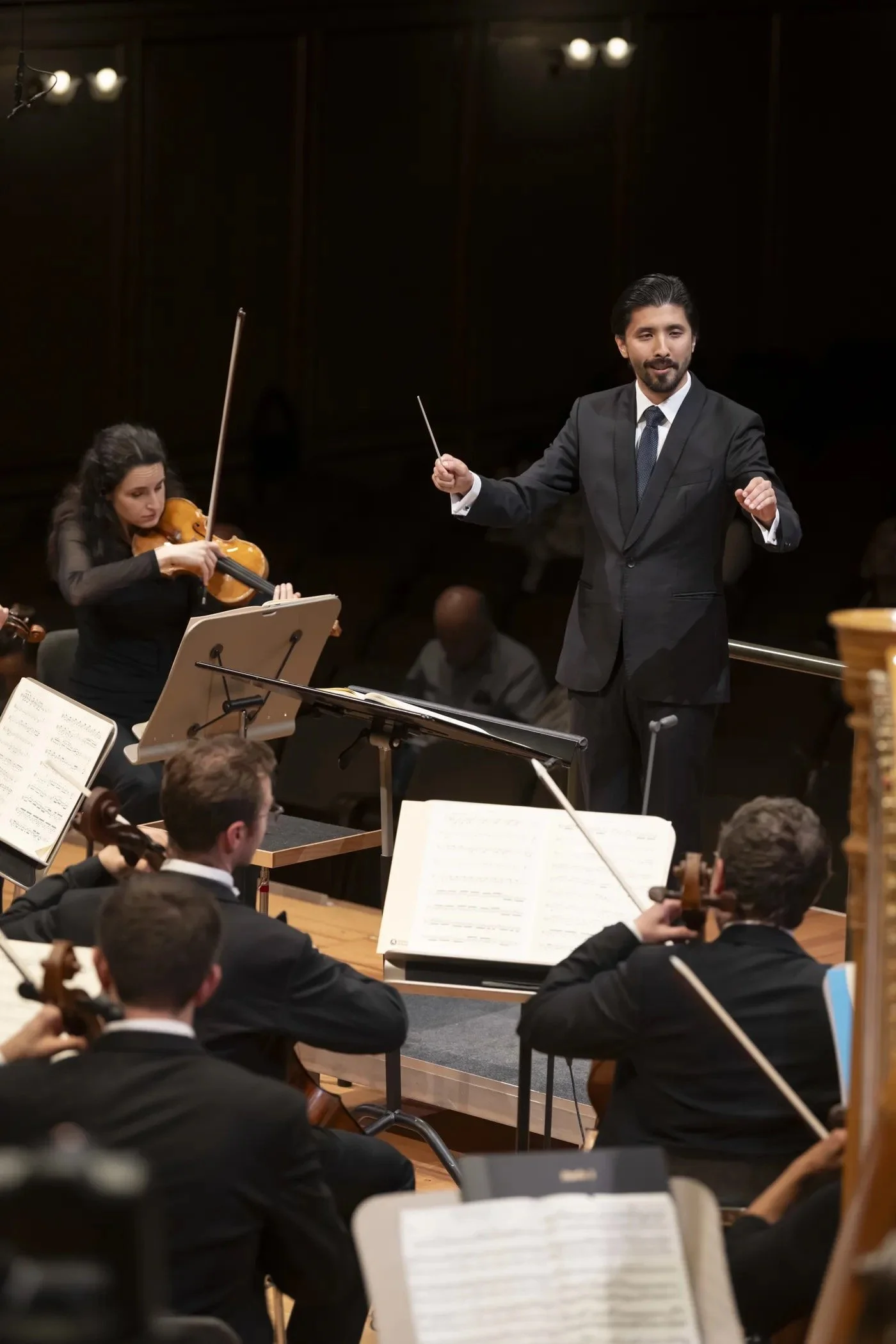
Working with young artists is something I care deeply about.
Your workshop on conducting during the festival offered participants a valuable opportunity to explore leadership in music. What were the key ideas or principles you wanted to share with young musicians?
It was particularly interesting because the participants came from very different levels of experience. One young conductor was already quite advanced, clearly experienced and accustomed to standing in front of orchestras, while another was approaching conducting for the very first time, simply curious about how it works. Others were somewhere in between. Because of this diversity, my approach had to be adapted to everyone, meeting them where they were in their own development.
However, the central principle I wanted to share with everyone was that conducting is not only about organization. Of course, the technical side – understanding patterns, entrances, coordination, and ensuring that musicians know where and when to play – is essential. Without that foundation, conducting cannot function. But this is only the beginning, not the final goal.
The true purpose of conducting is to shape how the music should sound. For instance, when conducting a well-known work such as Beethoven’s Fourth Symphony, the orchestra already knows the notes. What musicians want to discover is the conductor’s unique artistic vision: Who is this person? How does he or she want this phrase, this accent, this color to sound? This means that a conductor must not only study the score deeply and know exactly what they want musically but also develop a rich vocabulary of gesture capable of communicating those ideas clearly – whether an accent should feel sharp, warm, heavy, or lyrical.
For all participants, this connection between musical intention and physical communication was fundamental.
Conducting is ultimately not about controlling music in the abstract – it is about communicating with human beings who create that music. Without the musicians, there is no sound. Therefore, conducting is deeply human: it requires connection, clarity, and engagement.
One of the most important lessons I hoped to convey is that great conducting depends on human intelligence rather than mechanical precision. A conductor must truly engage with the players, establish direct communication, and inspire them moment by moment. Whether addressing a horn section, shaping a phrase, or guiding an entire orchestra, conducting is always about meaningful interaction. In the end, leadership in music is not simply about giving instructions – it is about creating trust, shared understanding, and artistic collaboration.
As both a performer and mentor at this festival, what has been your impression of the young artists?
For me, this has been one of the most moving aspects of the festival. Working with young artists is something I care deeply about, especially since I also teach pre-college students who are just beginning their serious musical journeys. There is something truly special about their spirit – their curiosity, openness, and willingness to learn.
What impressed me most here was how engaged they were. They asked thoughtful questions, were active throughout the process, and showed real courage in seeking answers. Some even asked very personal questions about artistic development and career paths – often the most difficult, but also the most important questions a young musician can ask. I deeply appreciated that level of sincerity and involvement.
It is important to remember that, although I may simply be a few years further along on this journey, we are ultimately part of the same artistic path. These young musicians are not just students – they are future colleagues. I can share my own experiences, challenges, and the decisions I made when I was their age, but before long, we will all be professional musicians sharing the same world.
That sense of continuity makes mentorship especially meaningful. It is not simply about teaching, but about supporting the next generation as they develop their own voices, their own artistry, and their own place within the musical community.
Emotions in music
Yesterday, during your concert you mentioned emotions in music. What different emotions do you recognize in the music you performed in yesterday’s repertoire?
There are many, of course. I think the first part consisted of three transcriptions is deeply spiritual in nature. For me, that is an essential dimension of this repertoire. In a way, I feel that music – regardless of one’s personal beliefs – connects us to something larger than ourselves. This sense of transcendence was very present yesterday, especially in works such as the Vespers line and other pieces that feel as if they come from another world. It is, in a sense, a search – a spiritual journey.
The Brazilian music, on the other hand, brings a very different emotional world. It is much more physical, dense, and grounded.
There is a strong connection to nature – Brazilian nature, which is deeply present in the culture, art, and imagination, from the Amazon to the rhythms of everyday life. Personally, I also feel very connected to that aspect, perhaps because nature plays an important role in my own life as well, including my passion for diving and exploring remote places. That sense of physical immersion is very present in the Brazilian repertoire.
Improvisation introduces yet another emotional dimension. For me, it is about immediacy and presence. While many emotions can emerge in the moment, the most important aspect is that it is alive – it is not fixed or pre-determined. It unfolds in real time, and that creates a strong sense of awareness and connection to the present moment.
And then, of course, Musorgsky contains almost everything emotionally. I feel that Pictures at an Exhibition can be understood as a kind of spiritual journey – moving through struggle, darkness, and confrontation with evil, through images such as the underworld, devils, and Baba Yaga, and ultimately toward redemption. For me, it is very much a journey toward light, toward a sense of arrival and transcendence.
For me, improvisation is really at the core of the musical experience.
〰️
For me, improvisation is really at the core of the musical experience. 〰️
To me, music is not only about reading a score correctly, but about truly „speaking” the language of music.
Improvisation played an important role in your concert, especially through the audience’s suggested themes. Yesterday, you improvised on two different themes, yet within those spontaneous creations one could hear influences of Bach, Chopin, and even jazz. What does improvisation mean to you as an artist, and which composers or musical styles inspire you the most?
For me, improvisation is really at the core of the musical experience. I think music is a very particular kind of art, because unlike painting or sculpture – where the work already exists as a finished object – the music does not exist until it is performed. Even when it is written down on a page, it only becomes alive through performance.
In that sense, interpretation itself already requires bringing music to life. When I perform a piece, I feel a bit like someone visiting a museum, such as the Louvre: my role as an interpreter is to present and share a work of art that already exists. However, the truly creative act in music lies in composing – and, for me, improvising is a direct extension of that creative process.
Historically, improvisation was a natural part of being a musician. It was expected that performers would be able to improvise. Over time, that practice has largely disappeared from classical music and migrated more into the jazz tradition, which I deeply admire. I sometimes feel a sense of loss about that development.
To me, music is not only about reading a score correctly, but about truly „speaking” the language of music. Reading notes is one thing, but understanding and owning the material allows you to go beyond the written page. It is a bit like learning a language: you can read it correctly, but that does not necessarily mean you can speak it fluently and expressively. In the same way, improvisation allows you to truly inhabit the music rather than simply reproduce it.
My own background also shaped this approach. I came into music quite naturally, through church music as a child. There, you often had to learn pieces quickly, sometimes play them in different keys, or adapt without a written score. That experience taught me early on that music is something flexible and alive, something you do rather than simply read.
I have been strongly influenced by that experience ever since. In terms of repertoire and inspiration, composers such as Bach, Brahms, Rachmaninov, and Chopin have been central in my musical life. Their language naturally finds its way into my improvisations. I also draw from jazz and bossa nova traditions, which remain important influences for me.
So, improvisation for me is not something separate from classical music – it is a way of reconnecting with its origins: a living, spontaneous, and deeply personal form of musical expression.
Today, we sometimes see pianists performing concertos while simultaneously leading or conducting the orchestra – a practice that, although rooted in historical tradition, has gained renewed attention in modern performance. In your experience, where does the role of the pianist end and that of the conductor begin? Is there a clear boundary between these two functions, or are they more deeply interconnected?
First, it is an incredibly enjoyable experience. I have done it myself, and it brings a unique kind of energy to performance. In fact, when I performed this way in Brazil, the orchestra musicians themselves were enthusiastic and even asked if we could do more projects like that, because it creates a very different atmosphere from the traditional soloist-conductor relationship.
That said, I believe this practice should never be approached simply because it appears fashionable or trendy. It must be done thoughtfully and with genuine musical purpose. Playing and conducting simultaneously is not just about performing the solo part and then making gestures during orchestral tuttis – it must make artistic sense. There are certainly situations where it works beautifully, but there are also works where the role of a dedicated conductor remains essential.
Ultimately, my philosophy is to be as minimal and effective as possible. The goal is not to impose unnecessary movement, but to facilitate communication and musical cohesion. When done with sensitivity, playing and conducting can become a highly rewarding artistic experience – but only when it truly serves the music itself.
For example, I would not approach every concerto this way. In large-scale works such as Brahms’s Second Piano Concerto, the musical and structural demands are enormous, and in many cases, having a strong conductor is invaluable. As Martha Argerich has wisely noted, when you have an excellent conductor, the pianist can fully focus on their own artistic contribution while trusting someone else to shape the orchestral framework. I completely understand and respect that perspective.
Therefore, leading from the piano should only be done when the pianist is truly confident that their conducting is genuinely enhancing the performance rather than merely adding visual effect. If it is done well, it can create a chamber music-like relationship between soloist and orchestra – one that many orchestras deeply appreciate because it fosters a more intimate and collaborative dynamic.
Ideally, the transition between pianist and conductor should feel completely seamless and natural. In some moments, conducting gestures are necessary and helpful; in others, they may be minimal or even unnecessary. Sometimes excessive conducting can become disruptive rather than supportive. For me, the key is restraint: every gesture must serve the music.
Different perspectives within the same musical language
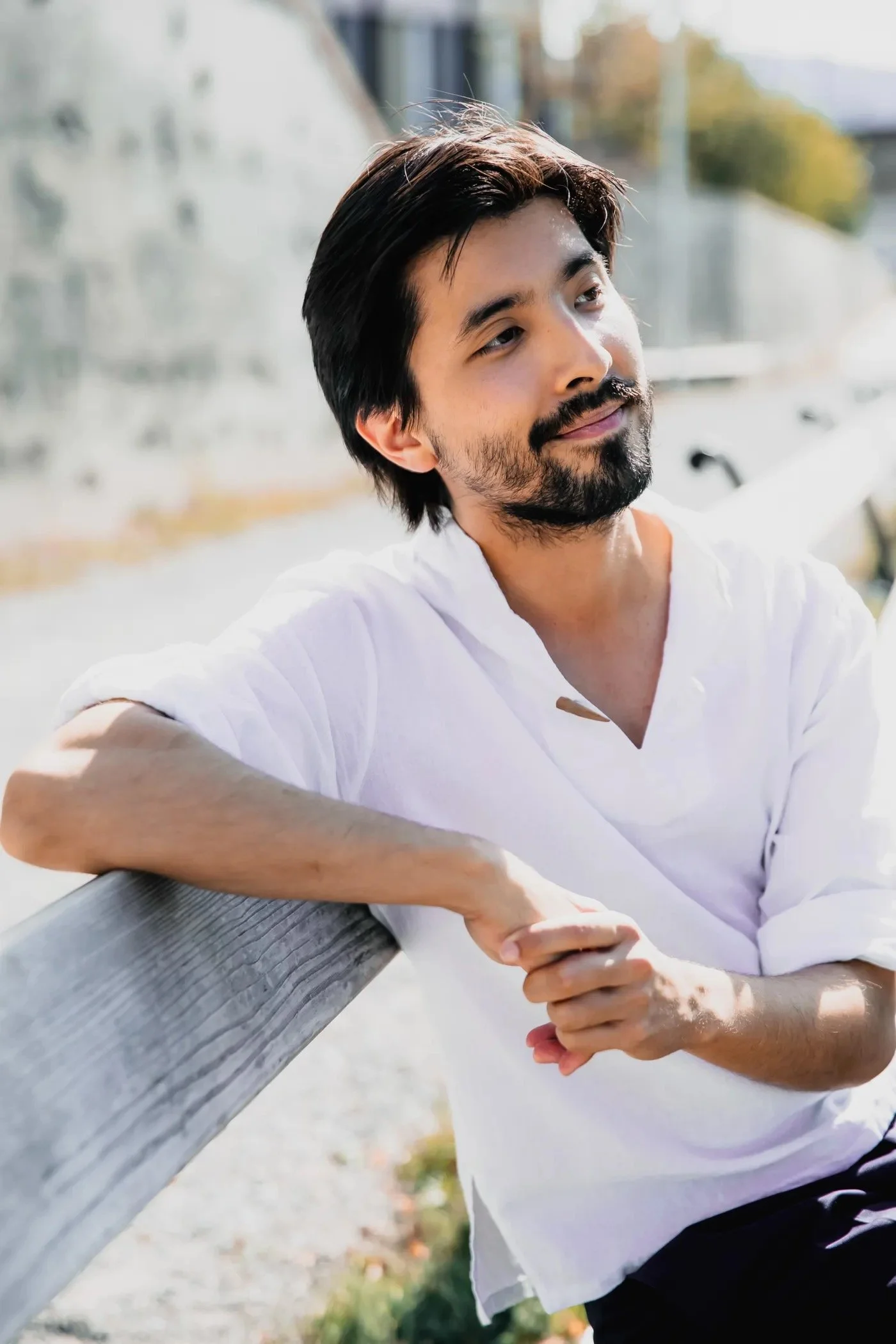
For me, these identities are not separate roles, but different perspectives within the same musical language. They constantly interact, inform each other, and ultimately make my artistic work more complete.
As a conductor, composer, and pianist, how do these different aspects of your musical identity shape and enrich one another?
This is sometimes a difficult question for me, because I once had an interview where someone asked me how I would divide myself in percentages – as a pianist, composer, and so on – and said that I was „difficult to market” as an artist. At the time, I remember thinking it was a strange question.
I understand where it comes from, of course; in today’s world there is a need to categorize and define people clearly. But from the perspective of music itself, I do not really accept that kind of division. If you ask me in practical terms how I spend my time, perhaps at certain moments I am more focused on the piano, at others on conducting or composing. But in essence, I feel I am 100% all these things at the same time.
Naturally, if one activity were to prevent me from doing another at a high level, then that would be a problem that needs to be addressed. But when they are in balance, these roles enrich one another in very meaningful ways.
For example, as a conductor, my background as a composer and improviser allows me to approach a score not only as something fixed, but as something alive. I often ask why a composer wrote something in a certain way, and how it might function in a specific acoustic or with a specific orchestra. Sometimes that also means making practical adjustments to achieve the intended musical effect. I once discussed this with a student who was playing a piano transcription of Scheherazade, and I suggested we could even rethink certain elements of the arrangement based on how it would sound in orchestral terms. That kind of flexibility comes from understanding music from multiple perspectives.
Being a pianist also deeply informs my work as a conductor. Having spent countless hours practicing, I am very aware of what musicians go through – the physical and mental demands of preparation. That experience helps me relate more directly to the performers in front of me. I believe conductors who have never experienced that reality sometimes find it harder to fully understand the musician’s perspective.
At the same time, conducting has also influenced my piano playing. It has changed the way I hear sound, especially in terms of balance, structure, and orchestral thinking at the keyboard. I often imagine how I want something to sound in a larger space, as if it were part of an orchestral texture, and that has enriched my pianistic approach.
Finally, as a composer, it is invaluable to have direct experience of performance and rehearsal. Writing music becomes much more grounded when you understand how it functions in practice, not just in theory.
Having built your artistic career between Brazil and Switzerland, how have these two cultural environments influenced your musical language and professional development?
I think, if I’m very honest, Switzerland has been a wonderful place to further my career and to have opportunities to meet people who became very important to me – mentors such as Herbert Blomstedt, Paavo Järvi, Shervazidze, and my piano teacher.
At the same time, I don’t really feel that Switzerland has shaped me culturally or musically in a direct way. The more I reflect on it, the more I realize that at my core I am, in a sense, a Brazilian musician. Of course, I am a very mixed Brazilian – half Japanese, one quarter German, and one quarter Italian. It is quite an interesting combination of cultures.
But despite that mixture, I can safely say that I identify primarily as Brazilian. The German side of my family, however, had a particularly strong influence on me, especially musically. I came into music through my German grandmother, so from an early age I was exposed to a certain Germanic musical and cultural sensibility. In that sense, I feel somewhat close to the German-speaking world, but still more rooted in Germany than in Switzerland itself.
Switzerland, for me, is a very special place. It is almost like a base in the mountains – somewhat isolated, quiet, and removed from everything else. It gives me a sense of stability, a kind of refuge from which I can go out and explore the musical world.
In general, I often feel there are two approaches to performing music. One prioritizes pulse, rhythm, and structure; the other prioritizes sound and color. Some great pianists focus primarily on sound, sometimes at the expense of rhythmic clarity, while others are extremely precise rhythmically but may sacrifice sonic flexibility. The greatest artists, of course, find a balance between the two.
I think we often take for granted how special that kind of environment is. I have been living in Switzerland for about ten years now, and it is easy to forget how rare and carefully built such a context is. What they have achieved there, both culturally and institutionally, is remarkable. My work at the university with young musicians is something I deeply value, even though it is also very international in character. In a way, Switzerland functions for me as a safe base, a kind of refuge.
At the same time, when I listen to my own playing – especially in composers like Heitor Villa-Lobos – I can hear how naturally this Brazilian energy is present. Even in other repertoire, there is often a certain rhythmic vitality that I recognize as coming from that background. I think in Brazil this sense of rhythm is so deeply embedded that we don’t even always realize it ourselves. I became more aware of it through teaching and through my work in improvisation, where I constantly try to explain and systematize things that, in practice, often come very naturally. Of course, conducting also plays a role in this awareness. It helps me understand structure, rhythm, and flow in a broader sense.
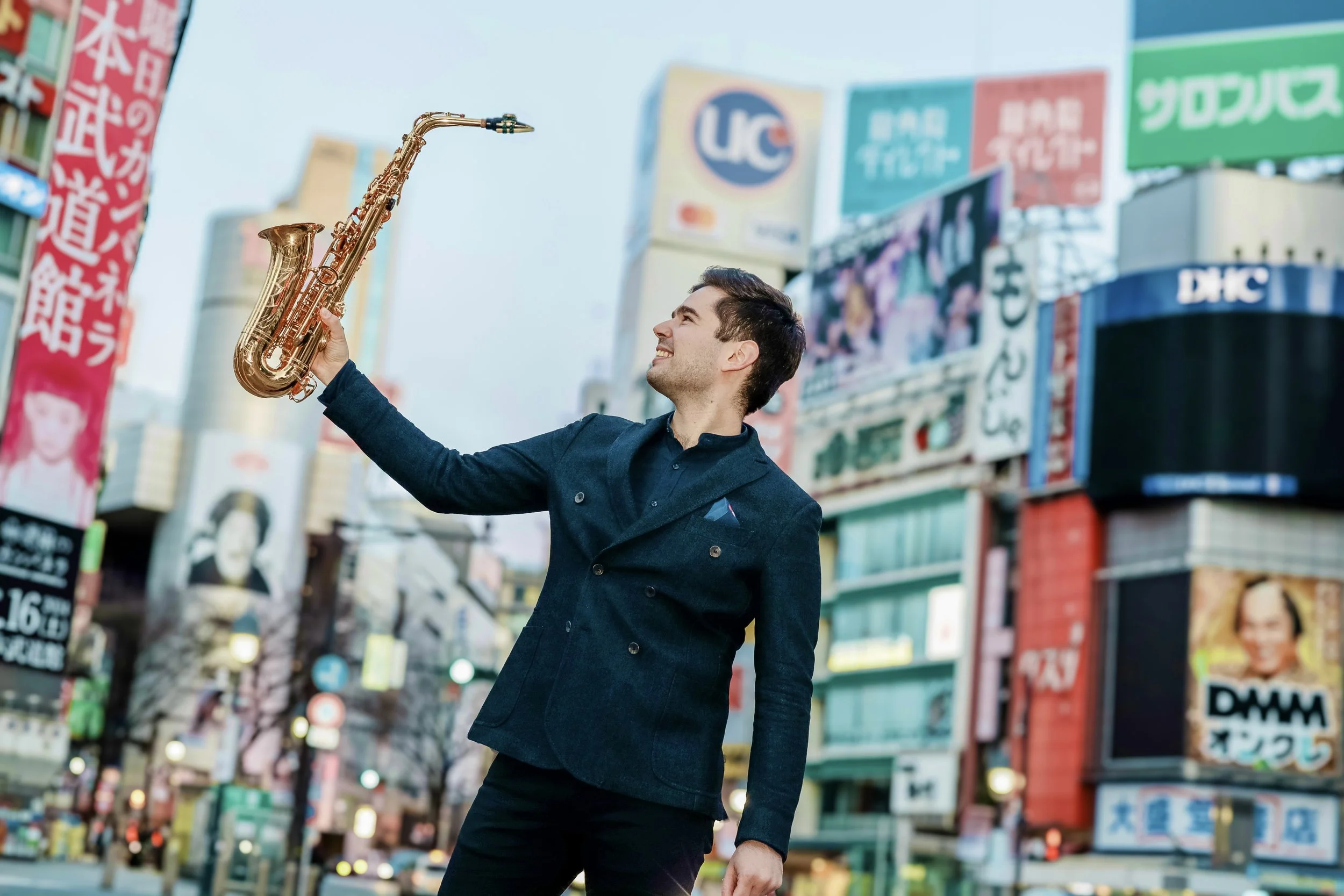
Upoznaj saksofonistu Marka Džombu – umetnika koji redefiniše ulogu saksofona u klasičnoj muzici
Klasični saksofonista, solista, kamerni muzičar… u svim aspektima svoje karijere, Marko Džomba nastoji da svima približi saksofon i muziku. U susret koncertu na ovogodišnjem BUNT festivalu, razgovarali smo o velikoj želji Marka Džombe da svoj instrument približi savremenom slušaocu muzike.
Strastveni saksofonista koji unosi novu energiju u savremenu klasičnu muziku
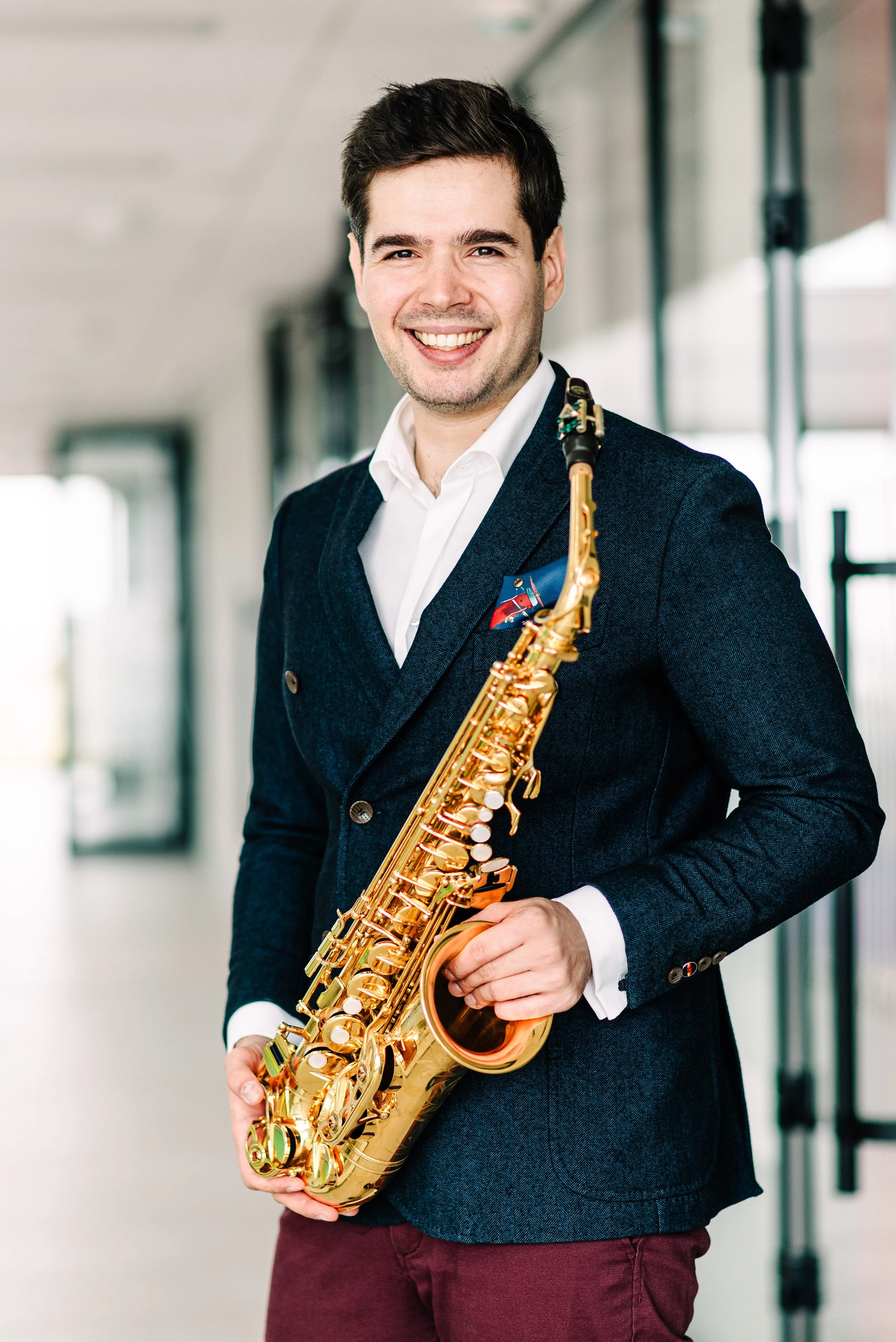
Fotografija: Miroslav MajstorovićKlasični saksofonista, solista, kamerni muzičar… u svim aspektima svoje užurbane karijere, saksofonista Marko Džomba nastoji da svima približi saksofon i muziku.
Rođen u Novom Sadu, svoje muzičko obrazovanje je nastavio na Univerzitetu za muziku i izvođačke umetnosti u Beču.
Nastupao je širom Evrope, u Kini, Japanu, kao i u renomiranim koncertnim dvoranama poput Bečkog Koncerthausa, Muzikferajna u Beču, Bruknerove kuće u Lincu, Ljubljanske filharmonije i Filharmonije u Luksemburgu, među ostalima.
Među brojnim nastupima izdvajaju se koncerti na kojima je nastupao kao solista sa Suzhou simfonijskim orkestrom, Sofijskom filharmonijom, Simfonijskim orkestrom Čajkovski (Orkestar Moskovskog radija), Betoven filharmonijskim orkestrom, Filharmonijskim orkestrom iz Brašova, Filharmonijskim orkestrom Bad Rajhenhala, Vebernovom kamernom filharmonijom, Bečkim orkestrom Jeunesse, kao i Orkestrom Oružanih snaga Slovenije.
U susret koncertu na ovogodišnjem BUNT festivalu, razgovarali smo o saksofonu, njegovim specifičnostima, kao i velikoj želji Marka Džombe da svoj instrument približi savremenom slušaocu muzike.
Potreba za samostalnošću
Rano si otišao iz Srbije da studiraš na Univerzitetu za muziku i izvođačke umetnosti u Beču. Šta te je na taj korak navelo i kakva si iskustva stekao na studijama koja možda u Srbiji ne bi dobio?
Više je to bila potreba nego želja – potreba za samostalnošću i prolaskom kroz proces lične i umetničke emancipacije, kako bih jednog dana postao što bliža verzija muzičara i osobe kakva želim da budem. Zbog toga sam morao da napustim Novi Sad i nastavim školovanje negde drugde. Beč je u početku bio čista slučajnost, jer sam zakasnio na prijemni ispit u Kelnu, ali se na kraju pokazao kao izvanredan izbor.
Studirati na Univerzitetu za muziku i izvođačke umetnosti, među više od 2.000 studenata iz svih krajeva sveta, predstavlja neprocenjivo motivišuće iskustvo za svakoga ko je gladan znanja i novih pogleda na klasičnu muziku.
Koncerti u Beogradu
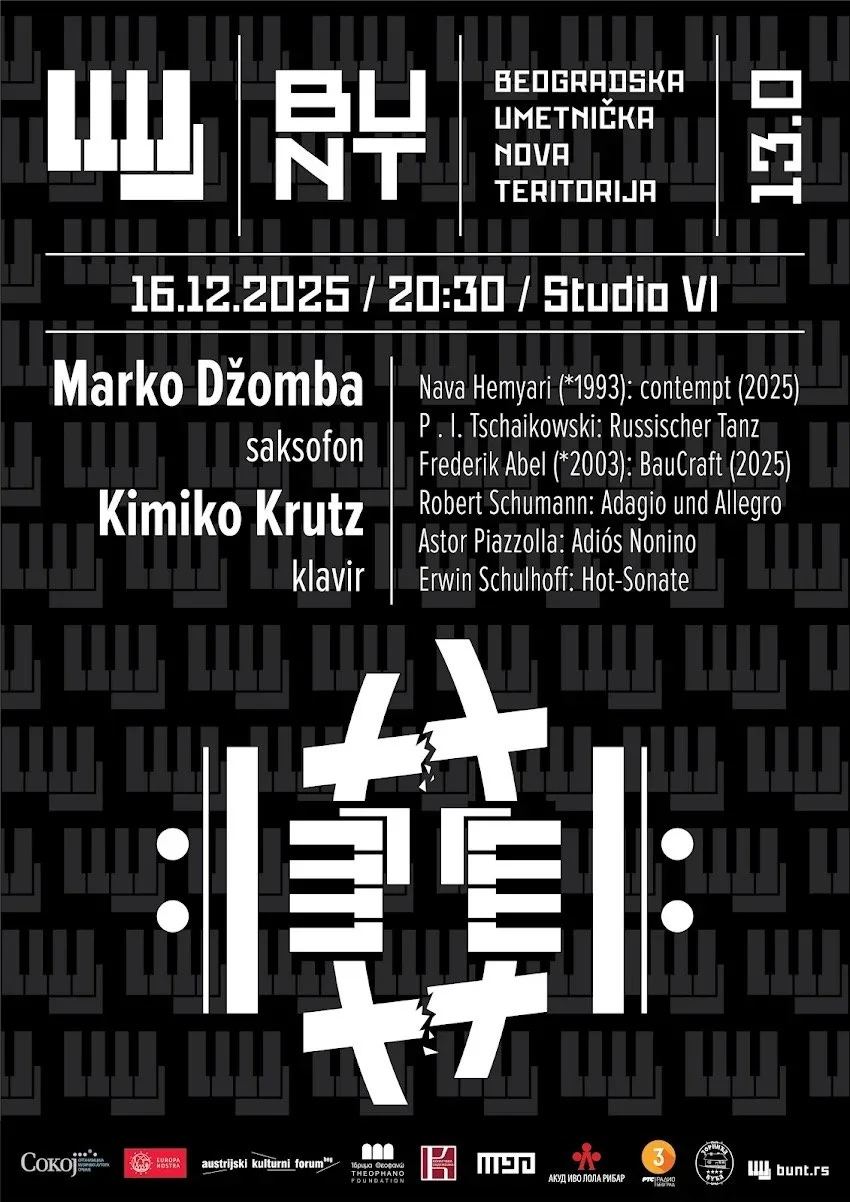
Predstoje dva koncerta u Beogradu – jedan 16. decembra na BUNT festivalu, a drugi 9. aprila sledeće godine. Kakav program pripremaš za nastup na BUNT-u?
Program obuhvata romantizam, džez u okviru klasične muzike, tango, kao i dve premijere novih dela. Ideja je bila da se u okviru jednog koncerta predstavi što više različitih aspekata saksofona. Na koncertu će zajedno sa mnom nastupiti pijanistkinja Kimiko Kruc.
Vidi još: Najava koncerta na BUNT festivalu
U aprilu 2026. godine nastupaš sa Simfonijskim orkestrom RTS-a u Glazunovljevom Koncertu za saksofon, pod dirigentskom palicom Srboljuba Dinića. Kako pristupaš ovom delu?
Svaki put kada ga sviram otkrijem nešto novo – nešto što mi u tom trenutku deluje očigledno, a ranije mi je potpuno izmicalo. Ovo delo se razvija zajedno sa mnom, kao muzičarem i kao osobom. Ponekad imam osećaj da je reč o dobrom prijatelju koji me uvek iznova iznenadi, iako se „poznajemo“ veoma dugo. Možda je, u ovom slučaju, tačnije reći da se i dalje upoznajemo.
Pored kompozicija Petra Iljiča Čajkovskog, Astora Piacole, Ervina Šulhofa, na BUNT-u će Džomba izvesti i savremene kompozicije mladih autora Nava Hemijari i Frederika Abela.
Saksofon - iz afekta
Kako si se odlučio za saksofon – instrument koji na koncertnom podijumu klasične muzike nije u velikoj meri zastupljen?
Iskreno, želeo sam da budem gitarista. Međutim, sa trinaest godina već sam bio prevazišao uzrast pogodan za učenje žičanog instrumenta, pa je izbor morao da padne na neki duvački. Iz afekta sam rekao – saksofon. Ni danas nisam sasvim siguran zašto. Naravno, tada sam mislio na džez saksofon; nisam ni znao da saksofon ima značajnu ulogu i u klasičnoj muzici.
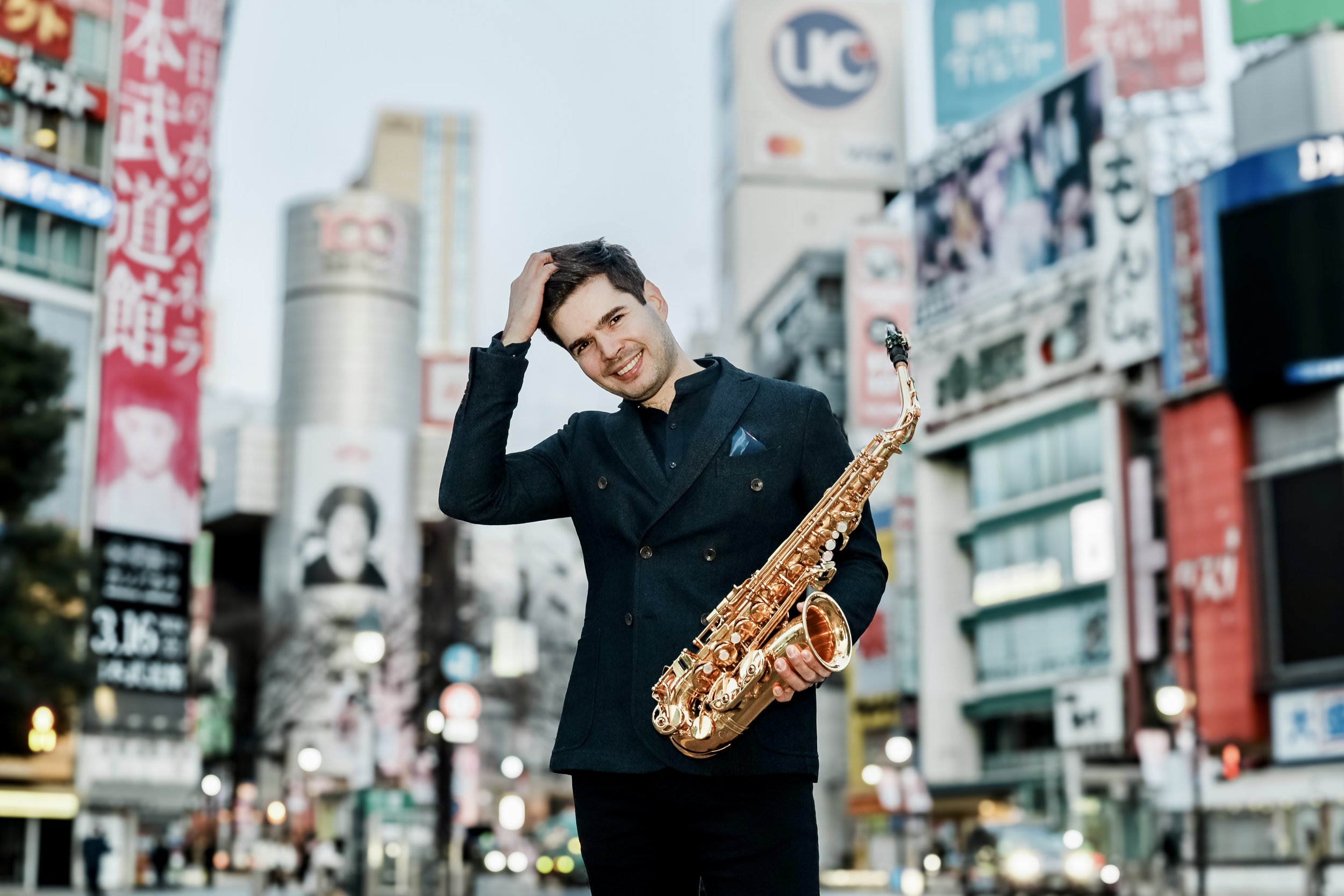
Kritičari opisuju ton saksofona Marka Džombe kao "delikatan, senzualan" karakterišući njegove nastupe kao "visoko virtuozne, energične, harizmatične", koje krasi "izrazita muzikalnost".
Fotografija: Haruka YanoZa veliki broj ljudi saksofon i dalje prvenstveno asocira na džez ili popularnu muziku.
〰️
Za veliki broj ljudi saksofon i dalje prvenstveno asocira na džez ili popularnu muziku. 〰️
Šta je to što saksofon čini posebnim instrumentom?
Njegova fleksibilnost tona, tehničke mogućnosti i veliki dinamički raspon. Saksofon je poput kameleona – može da se stopi sa gotovo svakom instrumentalnom kombinacijom i da u različitim muzičkim stilovima zvuči kao da im prirodno pripada. Od najtiših pijanisima do najglasnijih fortisima, od perkusivnih tonova do multifonih zvukova – ovaj instrument je prava enigma koja me i posle toliko godina neprestano iznenađuje svojim mogućnostima.
Trudiš se da saksofon popularizuješ kao solistički instrument i, kako si i sam istakao, on je i dalje u senci drugih duvačkih instrumenata. Zašto je to tako i kako vidiš njegovo mesto u klasičnoj muzici?
Za veliki broj ljudi saksofon i dalje prvenstveno asocira na džez ili popularnu muziku. Iako je prvobitno bio zamišljen kao instrument klasične muzike, klasična scena ga nije prihvatila tako velikodušno kao džez ili popularna muzika.
Ipak, situacija se postepeno menja. Sve više savremenih kompozitora piše za saksofon i time mu daje veću vidljivost. Raste i broj slušalaca klasične muzike otvorenih za nove zvukove. Klasični saksofon sve je prisutniji na sceni; iako još uvek zaostaje za klarinetom ili flautom, može se reći da ulazi u fazu svoje „mlade zrelosti“. Publika i kompozitori mu sve više ukazuju poštovanje, a među autorima koji su pisali za saksofon nalaze se i velika imena poput Kloda Debisija, Džona Vilijamsa i Aleksandra Glazunova.
Saksofon je poput kameleona – može da se stopi sa gotovo svakom instrumentalnom kombinacijom i da u različitim muzičkim stilovima zvuči kao da im prirodno pripada.
Stilski ekstremi u repertoaru
Da li poručuješ dela od kompozitora?
Da. Saradnja sa kompozitorima predstavlja neizostavan deo mog umetničkog identiteta. Rad na novom delu – od začetka ideje do koncertnog izvođenja – proces je koji donosi višestruke i izuzetno dragocene nagrade.
Tvoj solistički repertoar obuhvata oko 50 kompozicija. Kako bi ukratko opisao savremenu literaturu za saksofon?
Reč je o izrazitim ekstremima – od romantizma do spektralne muzike. Veoma je zanimljivo posmatrati kako se, na primer, Darijus Mijo ophodi prema saksofonu kao kvazi-popularnom instrumentu, dok Glazunov posebnu pažnju posvećuje boji njegovog zvuka. Mlađi kompozitori, između ostalog, istražuju nove zvučne mogućnosti saksofona, ponekad i kroz blage modifikacije samog instrumenta. Neverovatno je koliko bogata i raznovrsna literatura postoji, što je još jedan od razloga zbog kojih je saksofon za mene poseban.
Saradnja sa kompozitorima predstavlja neizostavan deo mog umetničkog identiteta.
〰️
Saradnja sa kompozitorima predstavlja neizostavan deo mog umetničkog identiteta. 〰️
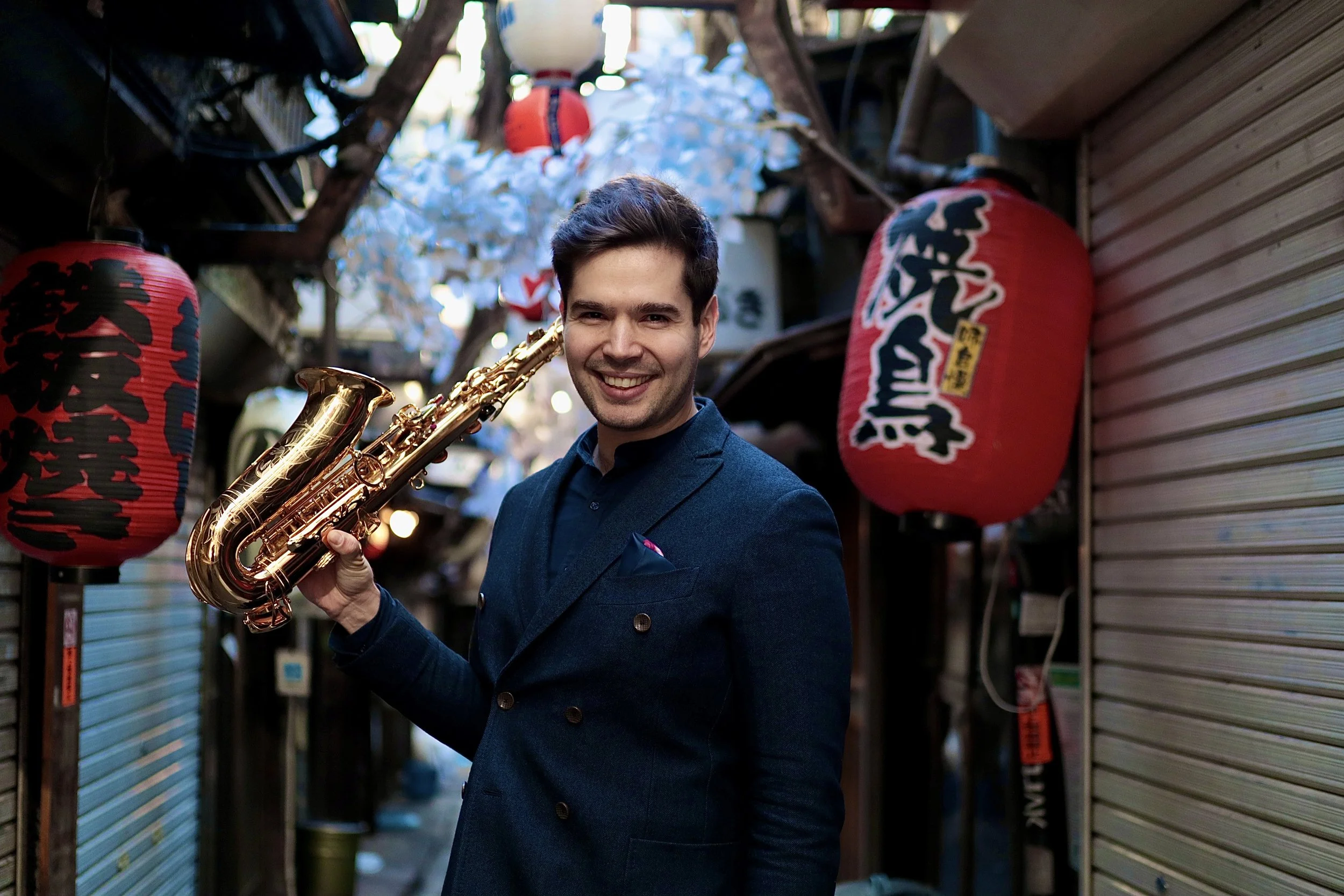
Marko Džomba je umetnik kompanija Yamaha, D’Addario i SCV.
Nastupa na saksofonima Yamaha Custom EX presvučenim 24-karatnim zlatom, koristi D’Addario RESERVE pisak i SCV ligature.
Fotografija: Haruka YanoKoji te koncertni događaji očekuju u narednom periodu?
Nakon BUNT festivala nastupam u Bugarskoj, gde ću izvesti Escapades Džona Vilijamsa i Glazunovljev koncert sa Filharmonijskim orkestrom Sofije. Potom slede koncerti u Japanu – u Sendaju i Fudžimiju – sa pijanistkinjom Maju Kotari.
U Beču me očekuje premijera solo projekta It’s a Beautiful (Anti)Social Life, u saradnji sa pet mladih kompozitora i uz praizvođenja pet novih dela. Planirani su i koncerti sa pijanistkinjom Kimiko Kruc u Hamburgu i Beogradu, kao i gostovanje u emisiji Volim klasiku na RTS-u. Tako izgleda početak 2026. godine – i zaista je lep.
Šta želiš da publika ponese sa sobom nakon koncerata u Beogradu?
Otvorenost i želju za radoznalošću.