Jérémie Conus: I believe the most important thing is to remain authentic
Interview with pianist Jérémie Conus on the occasion of his participation in the Three Days of Piano festival at the Guarnerius Art Centre.
Verzija intervjua na srpskom jeziku nalazi se na ovom LINKU.

Jérémie Conus
Photo: Fotografija: Natalija BajovićI met pianist Jérémie Conus at the Three Days of Piano festival, which took place at the Guarnerius Cultural Center from May 8 to 10.
As part of the festival, Jérémie gave an outstanding recital featuring a program that moved between Impressionistic sensibility, classical pianistic architecture, and contemporary reflections of Swiss musical literature.
Artistic identity is also about having the courage to try new formats.
In addition to his performance, he led several workshops with young pianists and delivered a lecture on how contemporary musicians can distinguish themselves in today’s musical landscape. The seminar was dedicated to the process of artistic self-definition for young musicians, with a particular focus on the creative design of concert programs and the development of an individual approach to performance.
Jérémie Conus is a multiple award-winning pianist whose interpretations have earned acclaim from both audiences and critics. His repertoire uniquely combines well-known masterpieces with works that are still waiting to be discovered by a wider public.
Courage to go beyond
How does it feel to take part in a festival where you are present not only as a performer, but also as a pedagogical speaker?
It is very good. I have never been part of a festival like this before. From the very beginning, I thought it was a great idea and a very strong initiative, and now that I can look back on these three days, I can say it was something special.
It was also very meaningful for the young people who came here, who hopefully learned a lot – not only by listening to us perform, but also through direct contact with us and the possibility to ask questions, including very practical ones about careers or more general musical topics. I feel honored to have been part of it.
Your seminar topic, Between Repertoire and Identity: How Does the Contemporary Musician Stand Out?, raises important questions about artistic individuality today. How do you personally define a musician’s artistic identity in an increasingly competitive and globalized musical world?
I would say artistic identity consists of several aspects, but one of the most important is the repertoire a musician chooses.
For example, I find it meaningful when young musicians have the courage to go beyond the standard repertoire and explore music they may not have encountered before – composers and works that are less known.
Artistic identity is also about having the courage to try new formats, not only performing pieces but sometimes also engaging with the audience in other ways, such as speaking or presenting. In today’s world, where there are so many musicians and so much accessibility through the internet and social media, I think it is increasingly important to have a clear artistic profile – something that makes you stand out.
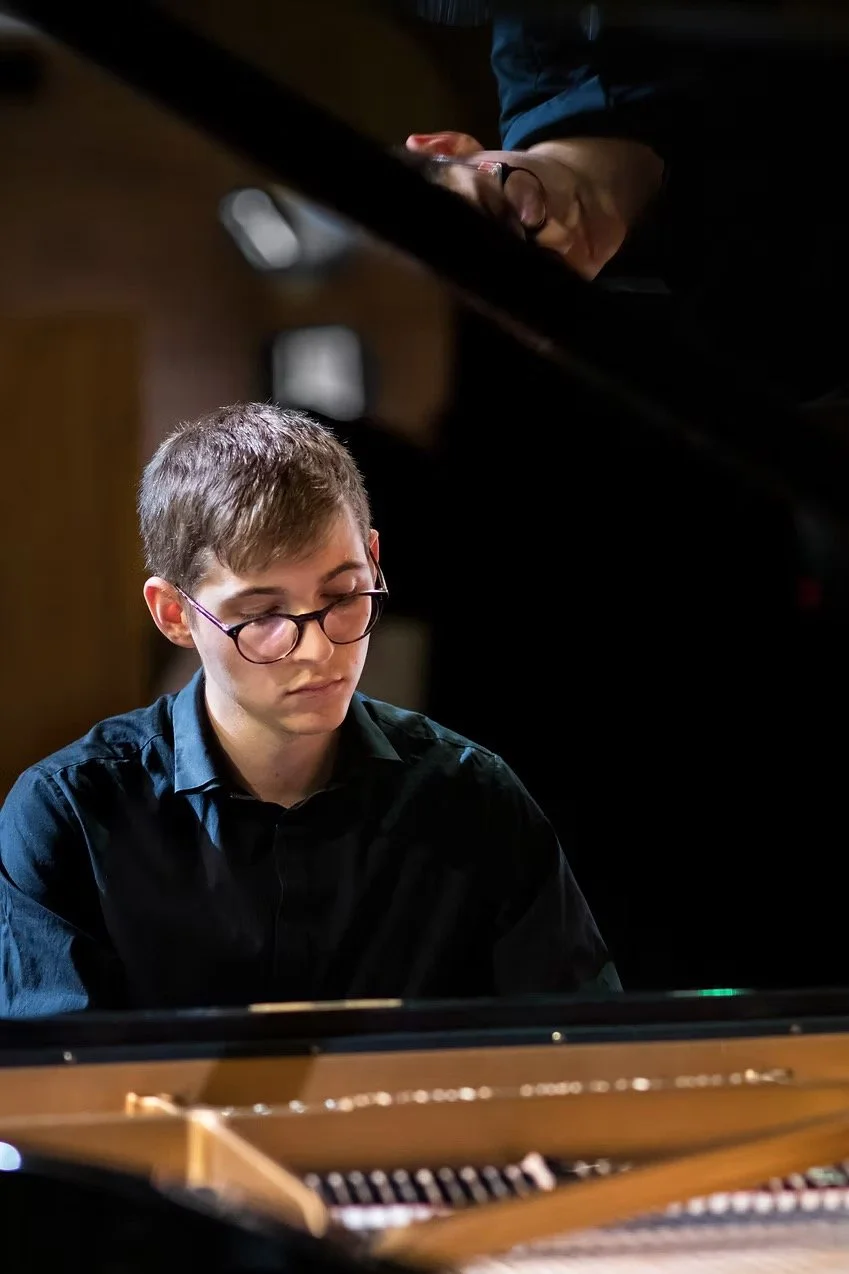
Photo: Art Dialog FestivalDiscovering new music
Your repertoire combines canonical piano literature with lesser-known works, particularly by Swiss composers such as Frank Martin and Arthur Honegger. What motivates your commitment to expanding traditional repertoire choices?
I often notice that audiences are very grateful when they can discover something new. After concerts, people sometimes come to me and say that they enjoyed the music, especially because they did not know it beforehand and were introduced to something new.
For me, this is a kind of mission: to share music that I personally love.
I first discovered this repertoire myself when I was younger, during a school project where I explored Swiss music. I was surprised by the quality of many composers, especially figures such as Frank Martin or Arthur Honegger, who I believe deserve to stand alongside the great canonical composers like Beethoven.
At the same time, I still deeply love performing the major masters of the repertoire. My goal is to combine well-known works with lesser-known pieces, and in my experience, this combination works very well in concert.
I often notice that audiences are very grateful when they can discover something new.
〰️
I often notice that audiences are very grateful when they can discover something new. 〰️
You have enjoyed success in numerous prestigious competitions. In your opinion, how important are competitions in shaping a young musician’s career, and what are their limitations?
Competitions are very important at the beginning. Every young musician should experience them to learn how to prepare a large program and how to handle the pressure and discomfort they can bring. They are also valuable for meeting other musicians, competitors, and jury members.
However, at a certain point – especially at university level – I think musicians should reflect on whether competitions are truly right for them. If someone enjoys and excels in the kind of repertoire that works well in competitions, then I would encourage them to continue. But if not, it may be better to focus on other artistic paths.
In my own case, I realized that competition repertoire and the competition environment were not my main interest. I was more drawn to alternative repertoire, and I also felt that my strengths were not necessarily those that are rewarded in competitions, especially when performing the same standard works as many other pianists.
Today, there are many ways to build a career beyond competitions, so I think it is important to approach this topic individually and realistically. Competitions can be useful, but they are not the only path.
Challenges facing young pianists
In your workshop and seminar, what are the most important challenges facing young pianists today as they seek to distinguish themselves artistically?
The main topic was again how to stand out artistically. This also includes the challenge of moving beyond a national or regional context, since many young musicians already have a strong level and perform locally, for example in Serbia or Belgrade.
The question is how to go further and build a broader artistic profile. I encouraged them to continue developing a clear artistic identity – something that offers organizers a distinctive concept. Festivals are often open to new ideas, especially when there is a clear artistic vision, for example combining Beethoven with contemporary music or other original programming ideas.
This kind of artistic clarity is what helps musicians move beyond standard expectations and develop a more individual path.
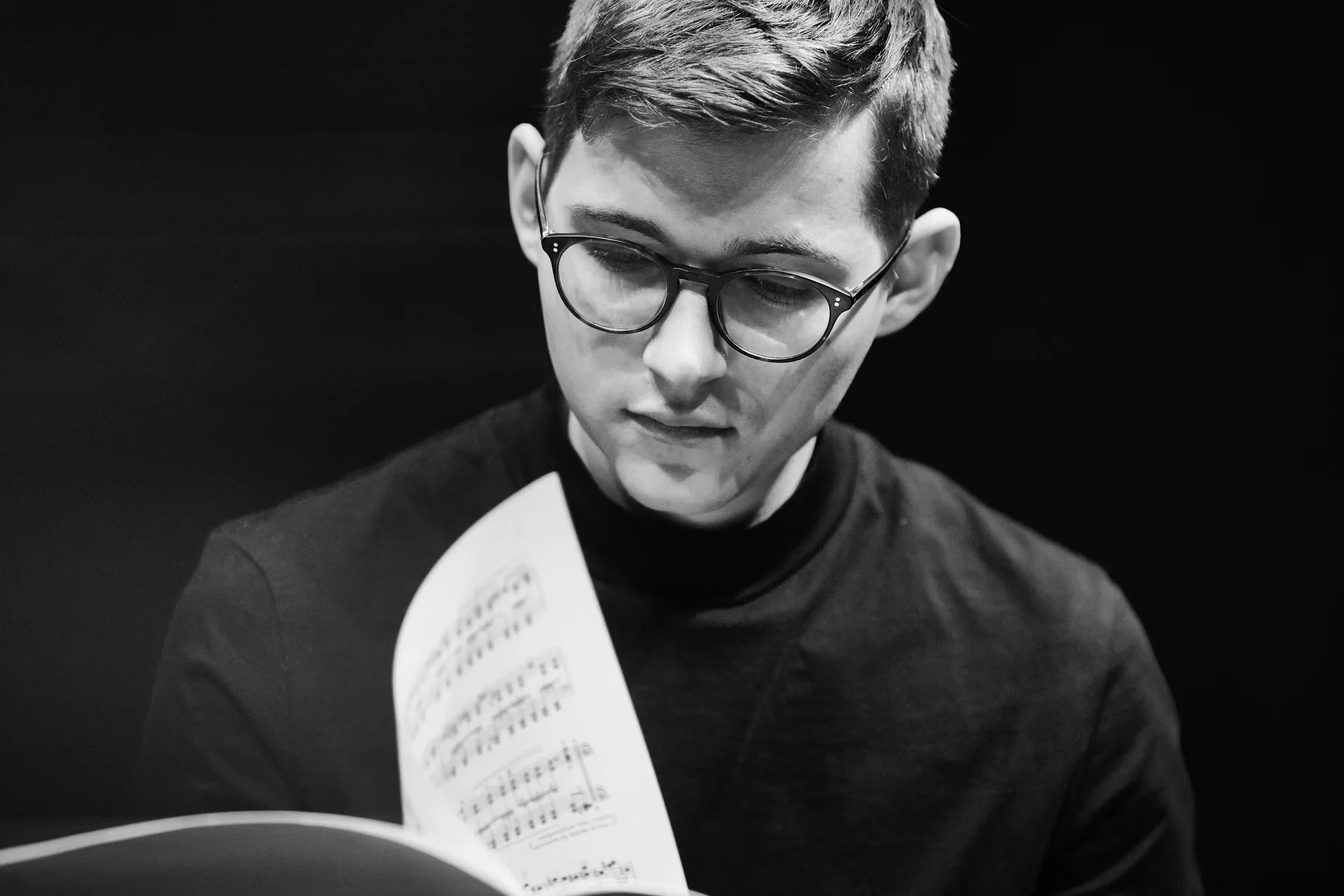
Photo: Janosch AbelIn an era where musicians are often expected to build recognizable public profiles beyond the stage, how do you view the relationship between artistic substance and professional visibility?
This is a very tricky topic. I believe the most important thing is to remain authentic. Audiences generally recognize and appreciate authenticity.
Of course, visibility is important today. Having a good media presence, recordings, photos, and promotional material is part of a modern career. However, this should never become the focus. The essence must always remain the music.
With social media today, it is easy to fall into the trap of prioritizing content creation over artistic depth. Some people successfully build a large online presence, but their artistic substance can sometimes suffer as a result.
So, I would say: visibility is necessary, but it should always remain secondary to artistic integrity. If someone wants to pursue a different path – becoming an influencer, for example – that is also a valid choice, but it is then a fundamentally different kind of career. For a musician, however, the core must always remain the music itself.