A conversation with Slava Vlasov: I wish people to see Wagner not as a monument, but as a human being
Interview with writer Slava Vlasov
Verzija intervjua sa piscem Slavom Vlasovim na srpskom jeziku nalazi se na ovom LINKU.
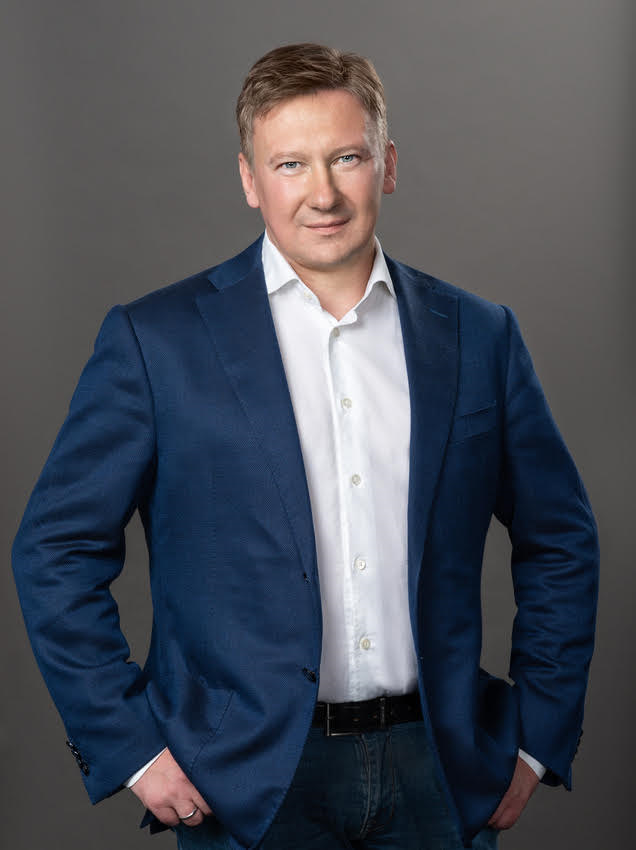
Photo: Private archiveSlava Vlasov is a remarkable figure whose professional path and artistic passion form an unusual and compelling combination.
A lawyer by profession and a devoted Russian scholar of Richard Wagner by vocation, Vlasov has dedicated years to researching, interpreting, and promoting the life and music of one of history’s most influential composers.
Through several books, extensive archival research, and dozens of concert-lectures, he has developed a distinctive approach to Wagner – one that seeks not only to illuminate the complexity of Wagner’s musical universe, but also to present Wagner himself as a deeply human, approachable, and historically nuanced figure.
In Serbia, Vlasov has become an important cultural ambassador of Wagner’s legacy, collaborating with Serbian artists to create concert-lectures that combine live performance, historical insight, and thoughtful storytelling.
These events offer audiences a rare opportunity to encounter Wagner’s music beyond traditional concert formats, making his works more accessible while challenging long-standing preconceptions.
As Belgrade prepares for the fifth edition of his concert-lecture Liebesnacht on 24th May in Belgrade Philharmonic Hall, this interview offers a closer look at Vlasov’s mission: to build bridges between cultures, histories, and audiences through Wagner’s art, and to deepen Serbia’s engagement with one of the most transformative figures in Western music history.
Evoking Richard Wagner
You came to Serbia with an impressive background as a Wagner researcher, writer, and publicist. What inspired you to introduce Serbian audiences to Richard Wagner in such a dedicated and original way?
I think, Mirko, my inspiration comes from different sources. I met many people. I spoke with many people, both professionals in music and, if you want, ordinary people. So, first, they wanted to know Wagner better. Second, many of them regreted that Wagner was not on the stage of the opera house for a long time now, nor in the Philharmonic. There was only one concert last year for Tristan, nothing else. Katarina Jovanović sometimes sings Wesendock-Lieder. Ana Gvozdenović, who will perform at Liebesnacht, did it once before, and that's basically it. I checked the internet and found the last trace of Wagner performance in Belgrade in 2013, for the two hundred’s anniversary of Wagner. So, people miss that. People want to know about Wagner.
I think the other part of inspiration comes from the artists I talk to, they are eager to perform. And then, after I tried this format of storytelling and music, I call it literary and musical evenings, I saw that people liked it, and I'm so grateful to everyone who came to my last four events. And I thank the people for their applauses after the events. They do give me inspiration.
I wish people to see Wagner not as a monument on a musical Olympus, not as an icon from textbooks or music literature. He was a human being, a man, a personality, an individual with his own strengths and weaknesses. I wish my audiences to continue discovering this.
People are a bit scared of Wagner’s music
〰️
People are a bit scared of Wagner’s music 〰️
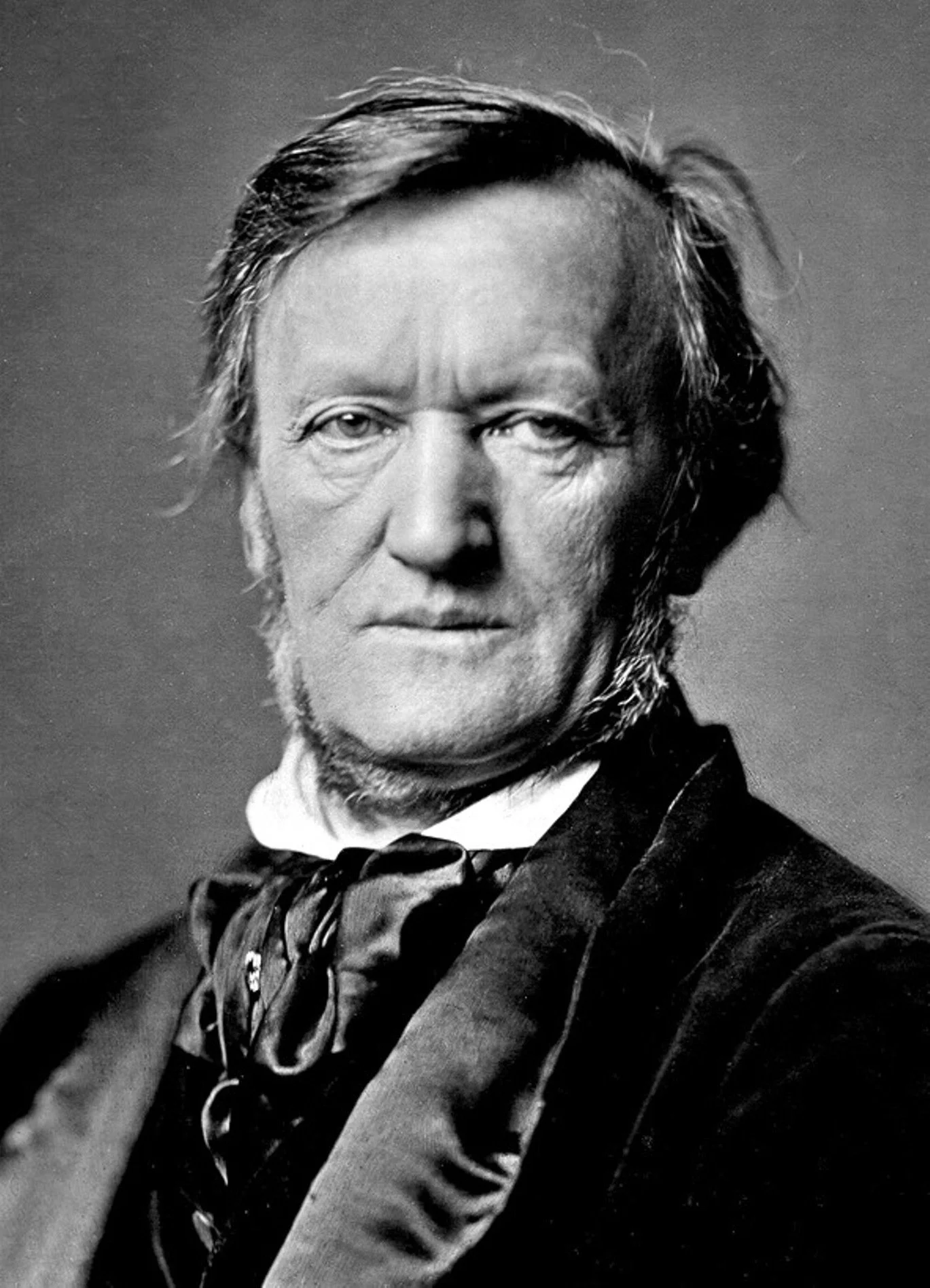
Richard Wagner, a composer who thought outside traditional frameworks.
Why do you believe it is important to reveal both the broader and less familiar aspects of his music and personality?
I think it's not only Serbian matter. It's in each country; I see that people are a bit scared of Wagner’s music because of its complexity. It's not an easy music. And in Serbia it is the same, like in any other country. And then I think maybe if we do it step by step, start first with revealing Wagner as an individual, more intimate Wagner, just opening up his world to people, start with his lyrics. And if people like it, they will be eager to learn more complex pieces of Wagner’s works. That’s what Wagner himself did at his own concerts.
He always started concerts with something like Lohengrin or Tannhauser or Flying Dutchman, or overture to Rienzi, or even his smaller pieces from his youth, like Faust overture. That was the first part of the concert. Everybody would applaud and be happy. And then, in the second part, he would present his more serious works.
This is exactly what we have already done in Belgrade at the events I mentioned. With the young pianist Matija Matejić, we started to present to the public Wagner’s miniatures. And then, with the Professor Maja Rajković, afterwards, - a more serious music, like music from Tannhauser, Meistersingers and Siegfried, and the others. And that works.
So, you had some kind of practice that you saw Wagner was doing back in his time, and you wanted that to present in Serbia. Did you find that successful? How was the reaction of the public for now?
I think it was a very nice reaction. I think the public is wonderful. How I find this out? Not only by talking to people, but also when I'm on the stage. If it's a chamber concert, you can see faces, their expressions, you can hear the laughter, when something is funny going on in the story. A complete silence during the music, and the emotions after it is over. That is probably the best indication.
But let us go back in times. Wagner started his career in Riga, a part of the Russian empire then. It was 1837, he was arranging his first concert. Can I quote to you a letter that he wrote to the musicians of his orchestra?
“Let’s be honest to each other. Not everyone will understand my serious music. Not everyone will come to the temple of art for worship. So, we need to do for our public a bit of light entertainment. Let’s make an interval during the concert and serve drinks to our public. Let them socialize, talk to each other, and after they leave the theatre they will say: oh, God, it’s such a beautiful evening!”
Wagner was thinking about something not traditional, how to make his music closer to the public. And probably, yes, I should be repeating the same path.
Changing perspectives on Wagner
I find it particularly interesting for my readers to consider Richard Wagner as an approachable person, because for many people, their first impression of Wagner’s music is often that it is something distant or inaccessible. However, you have offered an example of Wagner as someone who genuinely wanted to connect with his audience. From a historical perspective, how does this view compare with the various writings and interpretations of musicologists over time? In your opinion, is this perception accurate, and how do you personally approach this issue?
Let's go historical first and talk about Wagner himself. He recognized he could be unapproachable and wanted to fix that. That's why the drinks during an interval. Then, he asked his first wife Mina, who was a dramatic actress, to add her story performance to his music, to get greater attention of the public. He did what nowadays we call a subscription. At that time, they used Russian roubles in Riga, a ticket price for one concert was 1 rouble. He offered to buy tickets for 5 concerts for 3 roubles. He was really a marketing guru!
Nowadays, we can use his experience. Take, for example, Tristan and Isolde, pieces from which we will perform at Liebesnacht. People believe this opera is not only unapproachable but also unbearable. Tchaikovsky said it's soul draining.
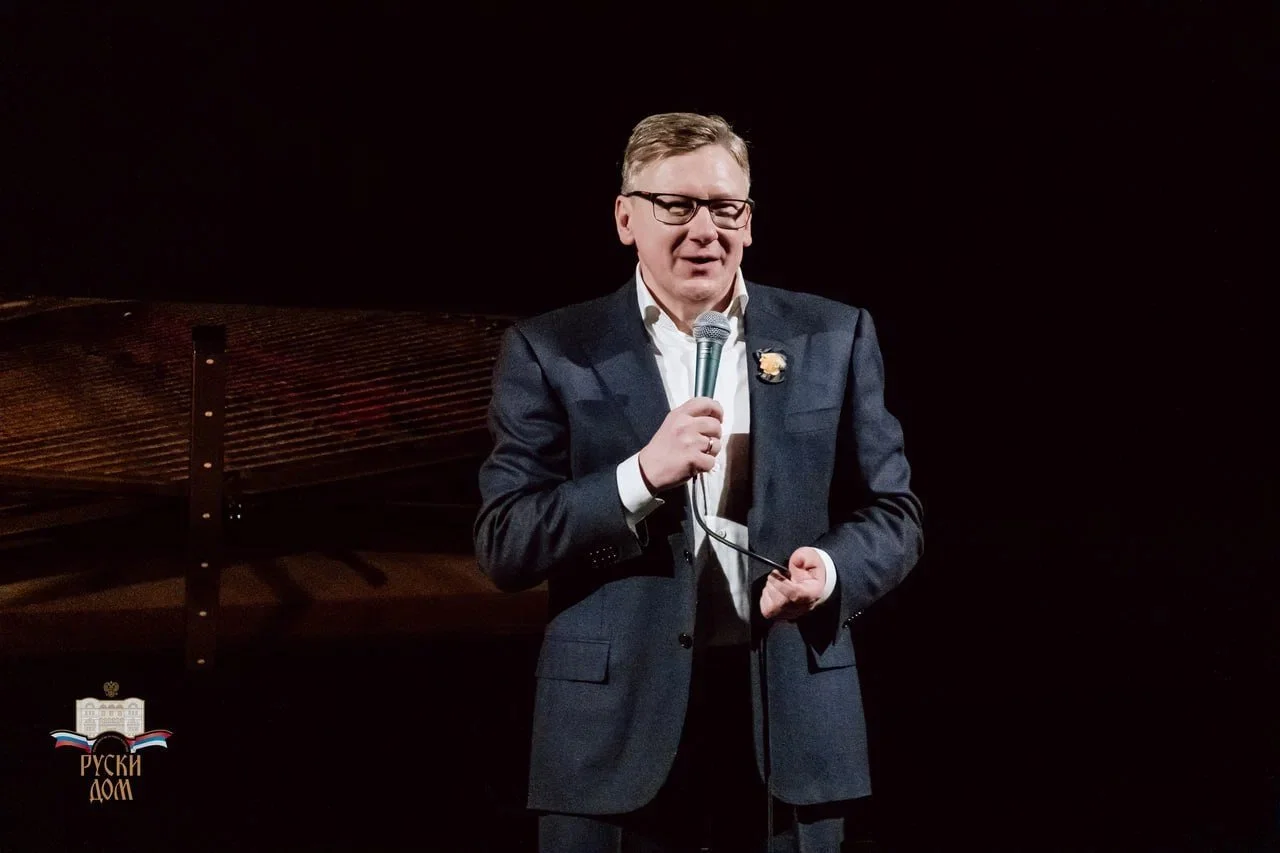
Slava Vlasov at one of his evenings dedicated to Wagner in Ruski dom
But if we give to people a story behind it, tell them that this opera is a very true speech by Wagner about his own life drama, his unrequited love… Then let them have a short drink. Chances are high that they will look at this music a bit differently, it will not sound that unapproachable. So, I will use Wagnerian techniques but in some modern way.
How has your experience in Russia, where much of your Wagner research and writing took place, shaped your perspective on introducing Wagner to new audiences in Serbia?
Thank you very much. Not only in Russia, I lived in many countries, I visited many countries, so I can speak from a bigger picture if you don't mind. And I see that, unlike in some other countries, people in Serbia are open to learn something new. Whether they like it or not, this is a different question, but they're more open minded. And I say this confidently based on my four concerts I've already had.
You mentioned Russia. Russia has probably one of the longest Wagnerian tradition in the world, because there were times when Wagner was on the stage in the Russian empire even more often than in Germany. In Russia Wagner was on the stage for the entire history, except a few years of the two world wars. The Serbian people now have a chance to learn this history.
Wagner recognized he could be unapproachable and wanted to fix that.
〰️
Wagner recognized he could be unapproachable and wanted to fix that. 〰️
Liebesnacht: Wagner through the lens of love
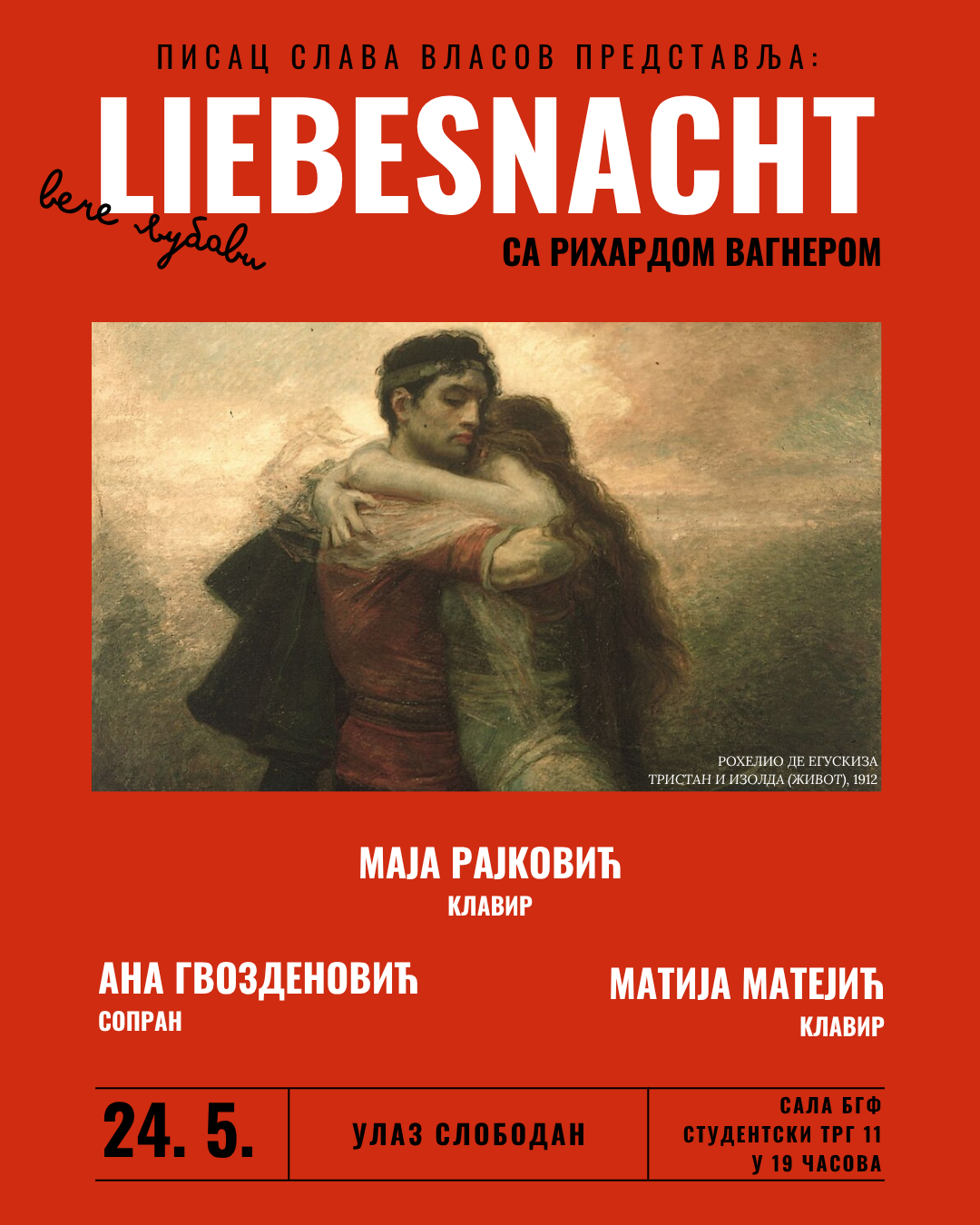
Your program Liebesnacht presents Wagner through the lens of love, intimacy, and personal inspiration. Why did you choose this particular perspective for Belgrade audiences?
My answer will be very simple and not academic. You will probably agree with me, Mirko, that love unites all of us. And love meant a lot for Wagner. Both love for ladies, and love for music. And I think, if we take this universal feeling as a starting point, that can help us explore Wagner in a different way. It's probably more simple way to introduce Wagner, but everyone will understand it. I think it was Bernard Shaw who said, if someone wants to understand and love Parsifal, then both the performer and the listener must be either religious fanatics or crazy people, but to understand and love Tristan and Isolde, only one thing is required - to fall in love at least once in life.
So, that's how Liebesnacht concept emerged.
What I will focus on in my storytelling at Liebesnacht, is that Wagner’s operas are a little bit different from other operas, because behind each opera plot is a personal story of Wagner. I welcome everyone to Liebesnacht, to learn who stands behind Lohengrin, Tannhäuser, Tristan, Hans Sachs, Siegmund and Siegfried.
Your programs often focus on rarely performed works, piano transcriptions, and lesser-known scenes. What guides your selection process when designing these evenings?
I don't know who will be in the audience. I assume they could be lovers of classical music, as well as newcomers. I select the repertoire so that it can unite these two parts of the public in their experiences. People who don't know the music will learn something new. People who know, will get a chance to look at the music from different perspectives.
Take as an example The Quintet from Meistersingers that Professor Maja Rajković will perform at Liebesnacht. Wagner himself said that the piano transcription by von Bülow sounds much better than the original. So, those who don't know this Quintet will just hear a beautiful love music. And those who do, will realize how wonderful this rare transcription is. Both types of public will find it interesting and enjoyable.
Take Siegmund's love song again. It's a small piece from the Ring, fifteen-and-a-half-hour-long opera, and it's the most beautiful music of these fifteen and a half hours. So, the question is, why Wagner devoted the most beautiful piece to sinful love of twins? Good question for a storyteller. Those who come to Liebesnacht, will know the answer, know Wagner’s inner thoughts. Matija Matejić will perform this music first ever in Serbia.
For Liebesnacht, I have selected the interpretations of Wagnerian music by the grand names in pianism, like Louis Brassin, Carl Tausig, Hans von Bülow and Franz Liszt.
Many of the works presented are virtually unknown to Serbian audiences. How do you balance scholarly depth with accessibility for listeners who may be encountering Wagner in this way for the first time?
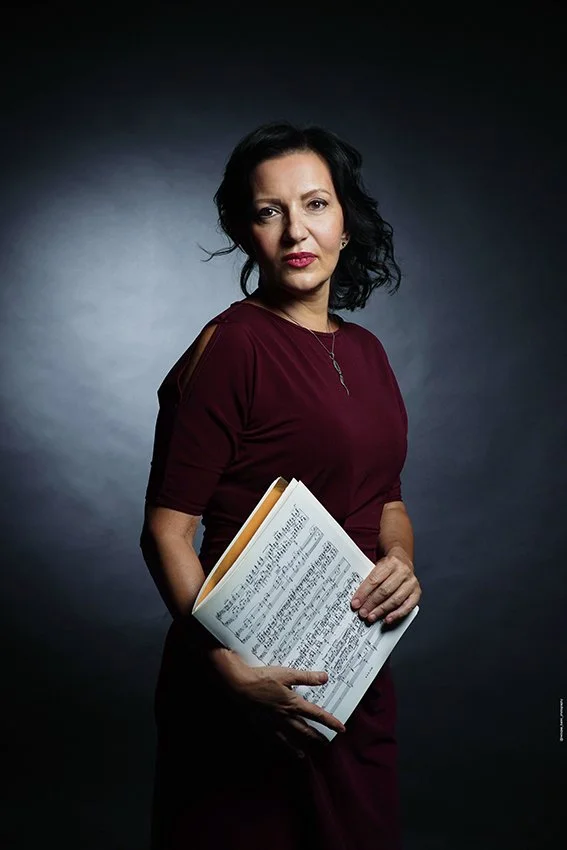
Maja Rajković, piano
Photo: Nebojša BabićFor me as a writer, as a storyteller, it is big responsibility to combine an academic accuracy with an entertaining presentation. Sometimes, to write a paragraph or make a one-minute speech may take weeks or months of research. I don't overload the public with the research process, just make an engaging storytelling. Still, I am comfortable that what I say is academically accurate.
Take, for example, the last concerts with Maja Rajković. They were devoted to the bonds between Wagner and the Russian princess Elena who helped Wagner in the most difficult times in his life. What did music professionals see there? An unknown information from the archives of the Russian empire, which is not publically available – I researched this for months. What did a public see? Personal letters and emotions of Wagner! Different shades of the same outcome – an ideal introduction to Wagner’s Romance to Evening Star from Tannhauser.
Of course, the concept of storytelling through music is not new, but relatively few artists incorporate it into their concerts today. Most performers simply come on stage, perform the program, and perhaps provide written program notes about the compositions, but they rarely speak directly to the audience about the music itself. How did you find the right balance between what you wanted to communicate and what audiences genuinely want to hear?
I can just predict, based on my experience. So now in Belgrade after four times, I sort of understand what questions people ask, what interests them, and that can make my story more user friendly to the public.
As you mentioned, yes, in Belgrade most of artists don’t talk during concerts. But with Wagner, I think it should be a bit different. Let’s look at Wagner’s own views of the best way to present music, say, at his theories of music drama or gesamtkustwerk - the unification of different genres of art. He really wanted a combination of word, meaning, sound, voice, and performance. That's what he wanted, so let’s do it.
Dialogue of generations
〰️
Dialogue of generations 〰️
You collaborate with Serbian musicians such as Maja Rajković, Ana Gvozdenović and Matija Matejić. How important is this intergenerational artistic dialogue to your vision?
Very important. Professor Maja, a pianist who is well known internationally. Ana, a doctoral student who lives in Germany and performs in many countries. Matija, a young talent who won prizes at several national and international competitions. Clearly, Ana and Matija can learn from Maja.
Their dialogue also gives an opportunity to the public to see different interpretations of music. In my view, it is great when youngsters have a chance to present their own vision of the masterpieces.
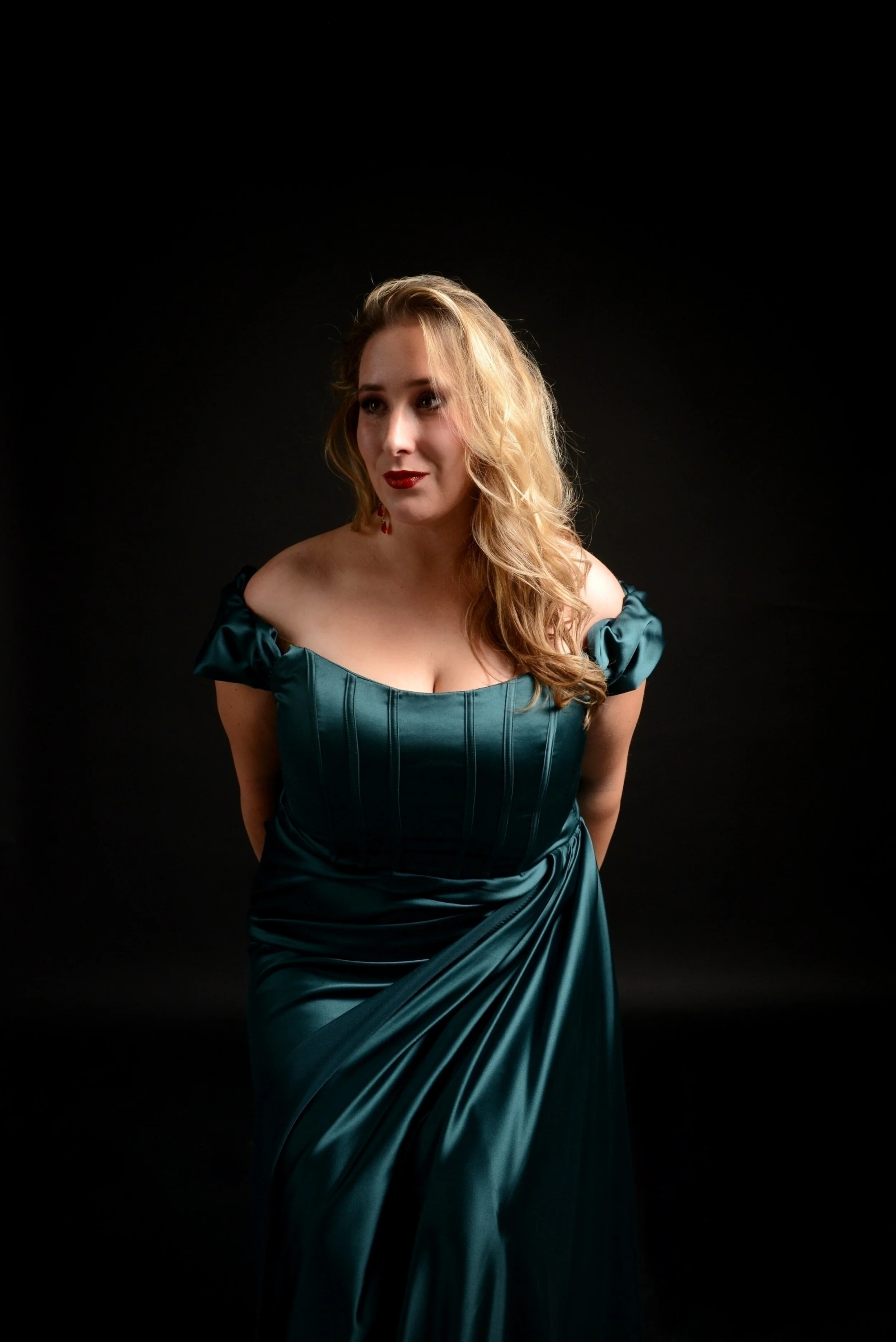
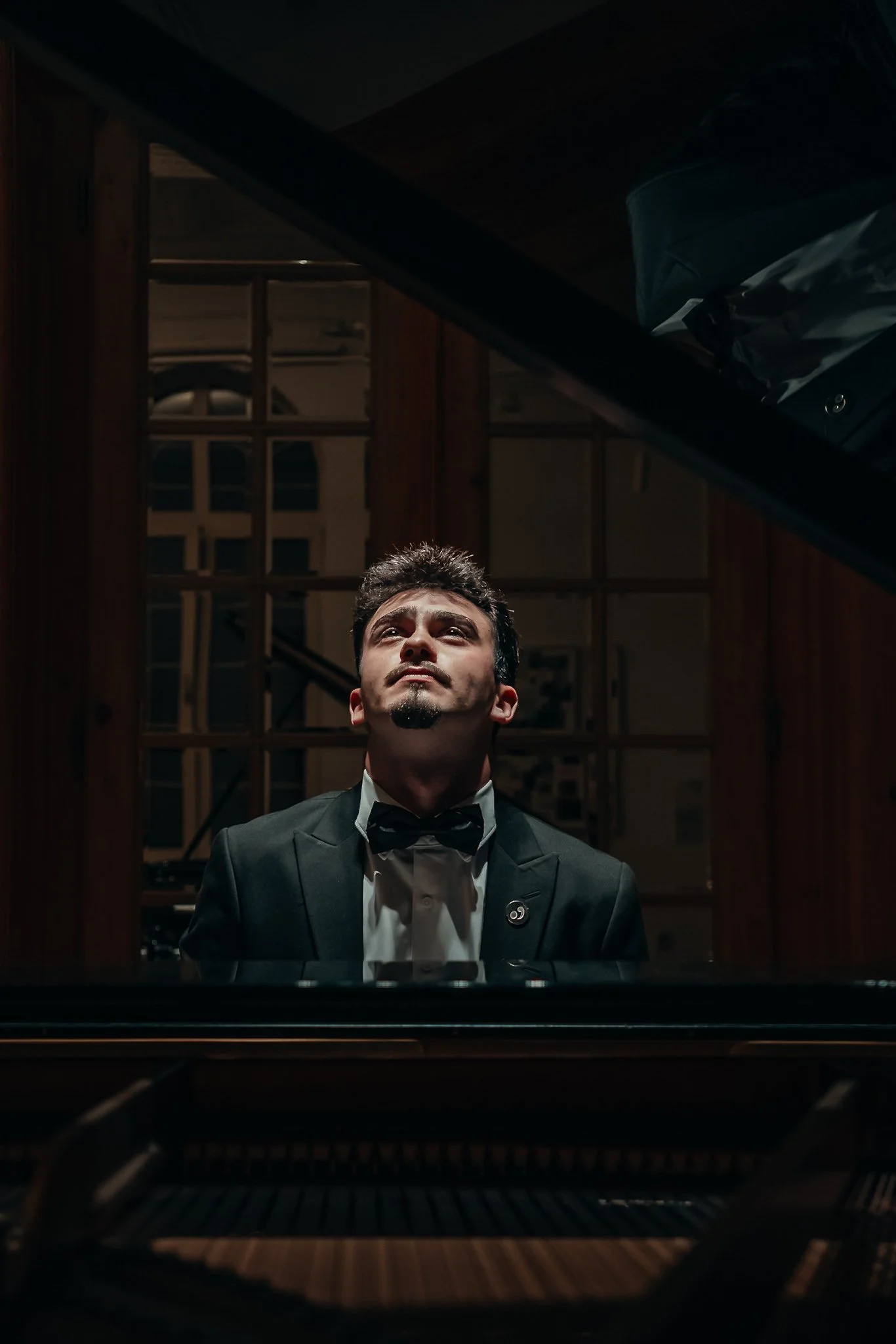
Ana Gvozdenović, soprano and Matija Matejić, pianoCan I give you one example? At my four events in Belgrade there was one piece in common, called Schmachtend, the very last work of Wagner. Professor Maja presented it in a real Wagnerian way, as a languor, torment. Matija presented it as a nirvana, the view of younger generation. So interesting – two interpretations but they both convince that this music was completely new for those times, like Scriabin that had yet to come.
At Liebesnacht, I hope, we will experience the same. The three artists I mentioned will perform pieces from Tristan and Isolde, let’s see how they do it.
I also see that the dialogue helps the artists in their artistic journey. Professor Maja started to practice other genius piano transcriptions of Wagner. She confessed to the audiences that she played them at home for own pleasure. At Liebesnacht she will perform those that she liked the most. Matija, for example, studied Liszt’s On the grave of Richard Wagner, trying to figure out what music Wagner and Liszt, father-in-law and son-in-law, stole from each other. Professor Maja found a very rare Wagner’s miniature devoted to Mathilde Wesendonck, and Matija will play it at Liebesnacht. That's fantastic.
Tricky questions
So you mentioned that you are listening and seeing what the audience wants to hear, but did you ever have some question that was maybe provocative or funny about Wagner, that someone asked you after the event from the audience?
A typical number one question: he was a favourite composer of Hitler, how can you promote a favourite Hitler’s composer? And I would say, listen, when Hitler was born, Wagner has been dead for years. As simple as that. Why a composer should be responsible for everyone who likes his music? If you hate me but I love the music you like, should you start hating your favourite composer because of me? Still, this is a sort of a cliche that repeats from country to country.
The other interesting question came in Serbia, why do I enjoy presenting piano transcriptions of Wagner’s music? Why don't I go with a symphonic orchestra to show all the grandeur of this music? That's a big question. If we have a symphonic orchestra, that is ready for that, I'll be more than happy to do it. I hope, over time I will do. The good thing is that if people ask, this means they want it.
Research in Belgrade: Hidden paintings and the leaflet on a flea market
I would like to add one more question regarding your research. A few months ago, you shared with me some fascinating archival materials you discovered at the Kolarac Foundation, and I also greatly enjoyed your remarkable article about the painting in Hotel Moskva. Could you tell us more about your research in Belgrade related to Wagner’s music, its presentation, and reception? What are some particularly interesting facts or discoveries you uncovered in Belgrade that connect the city’s cultural history with Wagner and his music?
You probably know everything better than me. I'm at the very beginning of my journey; I only arrived in Belgrade at end of last June. But what I basically did, I looked for any available publications about Wagner's performances in Belgrade. Professor Melita Milin made a very nice publication many years ago about all the Wagner productions in Belgrade. I bought it from a book collector and read with pleasure.
My wife found on a flea market the leaflet of the last production of Tannhauser in 1967, with the program, ticket, and even some handwritten impressions of a person who was at the performance. And about Kolarac – I found a program of the last big Wagnerian concert; it took place as long ago as in 1933.
It is a good start of the research, which I will continue. For now, I see there was a time of Wagner popularity in Belgrade, which, I don't yet know for what reason, is unfortunately gone. I hope we can restore it.
Let me move to the painting. It was a great surprise for me – in Moskva Hotel there is a huge reproduction of the painting of Parsifal with the naked ladies by famous Serbian artist Paja Jovanović. There were few artists in the world who depicted this scene on canvas, and Jovanović did it fantastically. I started my research from the book of the art historian Petar Petrović. Then I found a couple of old catalogues from exhibitions of Jovanović’s works, then went to his museum at Kralja Milana. I was excited to find out that Jovanović had four Parsifal paintings! They are truly Wagnerian by essence. When you go to Novi Sad, please go to Matica Srpska Gallery. They have an unfinished sketch of Jovanović’s last Parsifal. Once you do, let's continue our discussion.
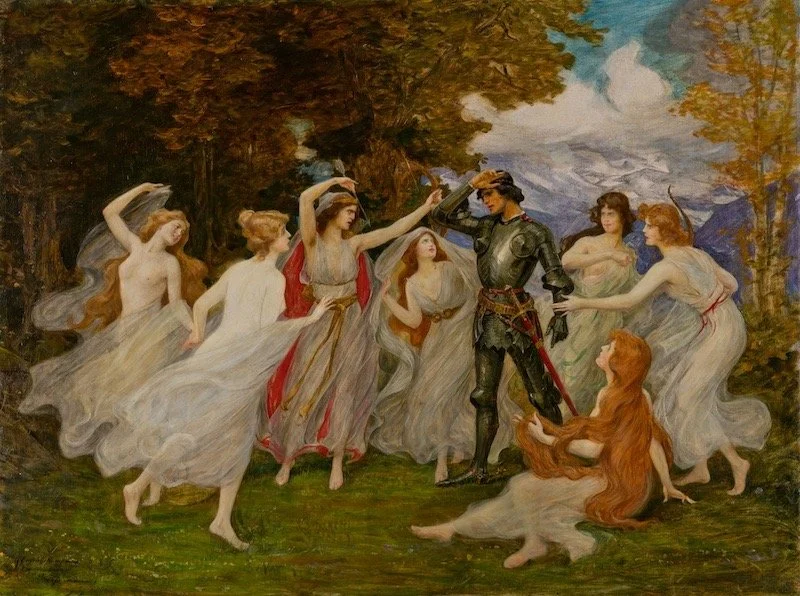
Paja Jovanović: Parsifal
Do you see your work in Serbia as part of a broader cultural mission – to build a deeper understanding of Wagner and perhaps broaden the country’s classical repertoire?
Maybe it's too early to talk about this, I only moved to Belgrade recently, but I already have a dream. I want to help Serbia to revitalise the Wagner Society, which is inactive for many years now. The benefit of doing so will be that the country can start developing Wagnerian voices with support from the international association of Wagner societies. Once it is done, the broadening of the county’s classical repertoire will be just a matter of time.
Personal intellectual journey with Wagner
As both a legal professional and passionate Wagnerian, how has Wagner’s artistic and philosophical world shaped your personal intellectual journey?
First, I want to talk about Wagner as a man. He had good life, but as a composer he had so many problems, hardships, misunderstandings, rejections and he managed all of them brilliantly. He can be a role model for anyone, not just a musician, but even a lawyer, to anyone who wants to become a guru in own area of expertise. He was a role model for me when I built my legal career and when I took a decision to shift from my legal carrier to novel writing.
About my intellectual journey, I could say now that Wagner’s philosophy, his operas, his music helped me to self-reflect, to think about matters which we do not focus on every day but reflect on from time to time. What is good, and what is bad? What are the world's problems? What is a purpose in life? What is self-sacrifice? What is redemption? Wagner helped me with that.
If Serbian audiences could take away one new understanding about Richard Wagner from your work, what would you most want them to discover?
Wagner’s heritage is very complex. Let’s discover that it is as complex as our world is complex, as our life is complex. We live in very turbulent times. If we wish, if we allow Wagner’s music to our hearts, this music can help us to set our minds right in these difficult times. This help will come in a very pleasant, aesthetical way.