
Klasični razgovori sa umetnicima.
Perspektive umetnika: priče iza nota. Razgovori o nadahnuću, stvaranju i umetničkim putevima.

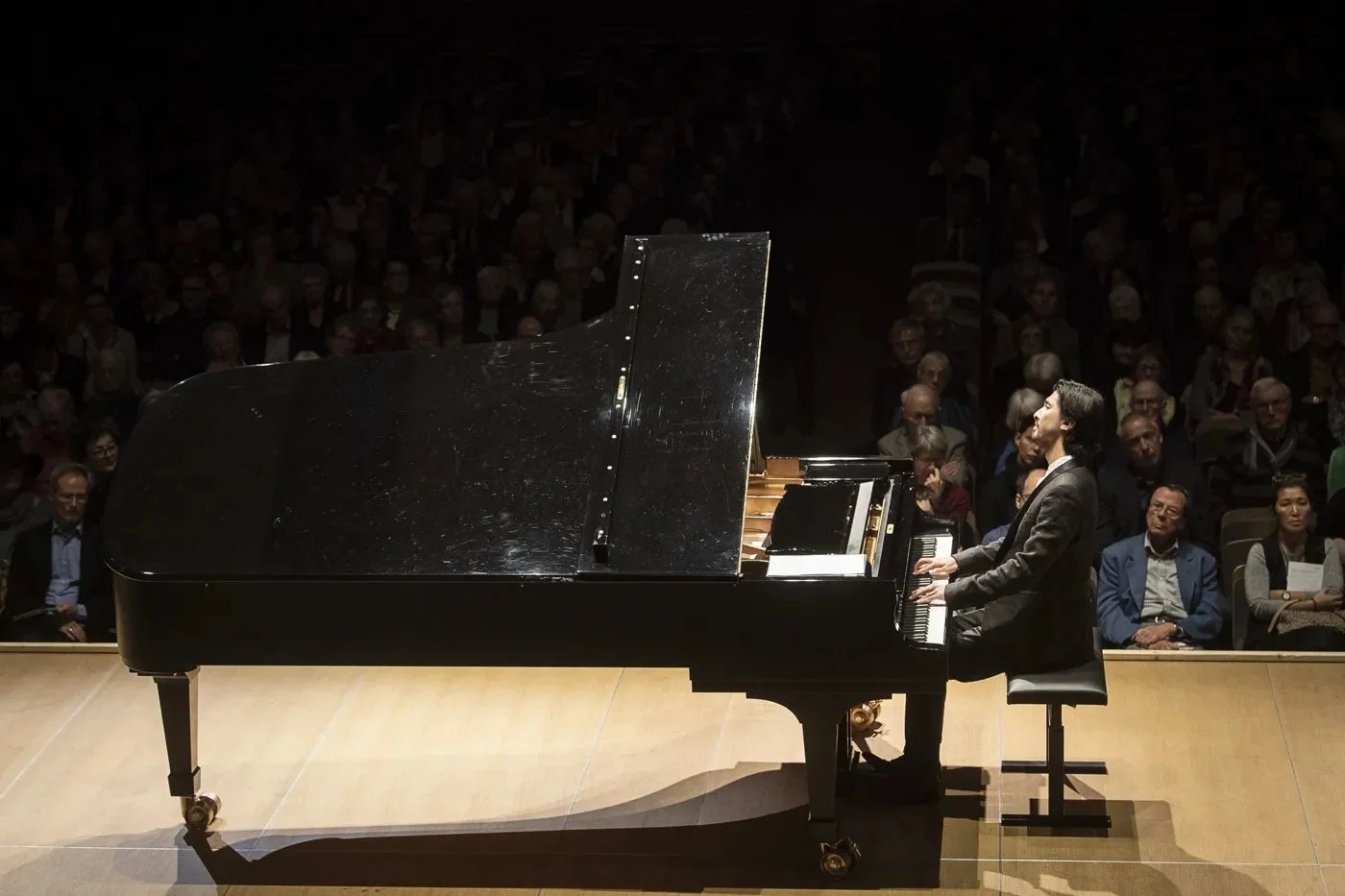
Richard Octaviano Kogima: Music as a Single Language – Between Piano, Conducting, and Composition
Pianist, conductor, and composer Richard Octaviano Kojima speaks about his participation in the Three Days of Piano festival, as well as about various aspects of his artistic activity, which equally encompass performance and education. In this interview, he also shares his reflections on music, as well as on the artistic experiences he has gained so far.
Interview with pianist, conductor, and composer Richard Octaviano Kogima on the occasion of his participation in the Three Days of Piano festival at the Guarnerius Art Centre.
Verzija intervjua na srpskom jeziku nalazi se na ovom LINKU.
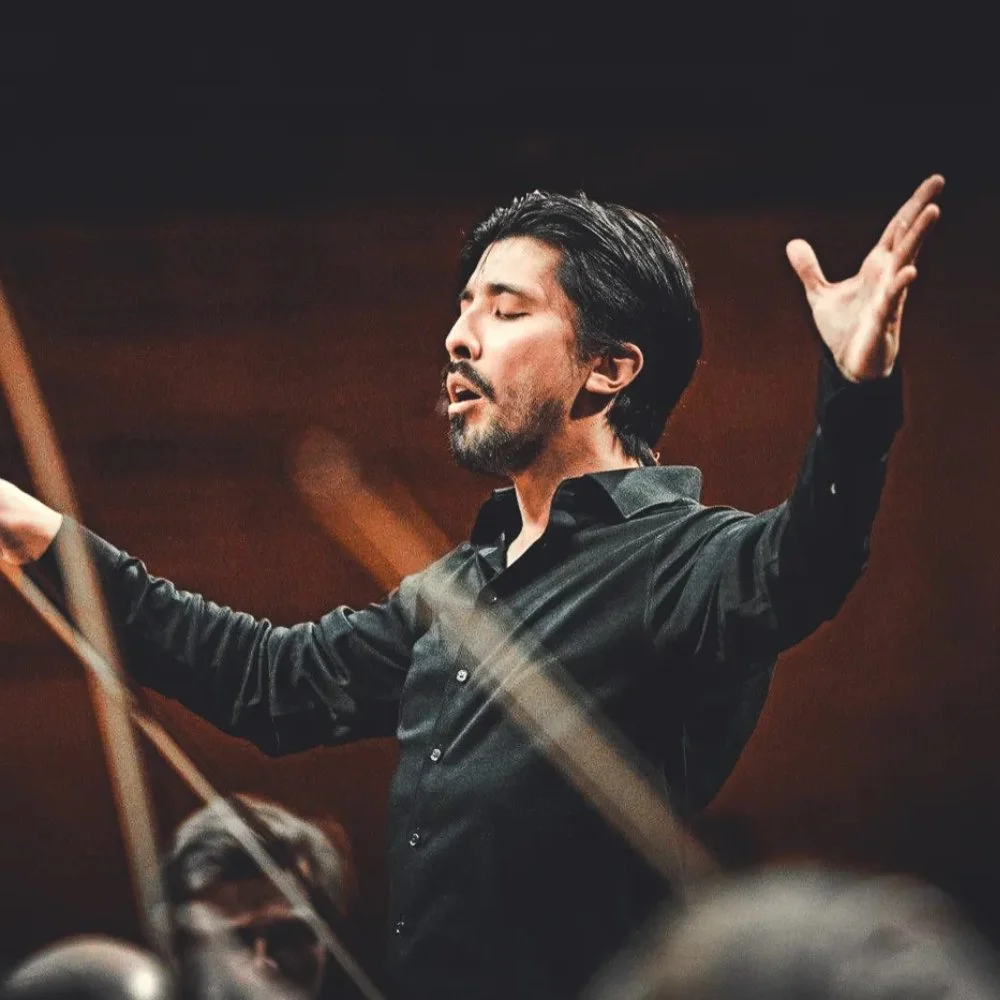
Photo: Agnete SchlichtkrullI met Richard Octaviano Kogima at the Three Days of Piano festival, held from May 8 to 10 at the Guarnerius Art Centre in Belgrade. During the festival, Richard gave an outstanding concert featuring a diverse and carefully curated program, leaving a strong impression on the audience and confirming his versatility as a performer.
In addition to his concert appearance, Richard led conducting workshops and held sessions with young pianists, during which he engaged in open conversations about musical expression, interpretation, and artistic development. His approach to working with young musicians is marked by directness, attentiveness, and a deep understanding of their artistic needs.
His versatility, intellect, and broad musical education make him an exceptionally open and inquisitive artist. Richard kindly agreed to speak for my blog not only about his participation in the festival, but also about broader questions concerning the contemporary artistic profession – what it means today to be a musician who simultaneously works as a pianist, conductor, and composer, and what demands such a multifaceted artistic identity entails.
Performer, Educator, Improviser
How does it feel to be in Belgrade for the first time as part of the Three Days of Piano Festival, where you are contributing not only as a performer, but also as an educator?
This is wonderful for me. It’s especially interesting because this is really my first time in Serbia. Somehow, from the moment they picked me up at the airport, I immediately felt that this was much closer to where I come from – Brazil – than to where I live now. I think there is something about the Balkans, perhaps. My wife is Romanian, so in a way, I feel connected to this region.
The openness of the people here makes me feel at home. So, while it is exciting, there is also a comforting feeling. It’s not only about everything being new, but also about recognizing something familiar. In a way, I’m doing here the same thing I was doing a couple of weeks ago in Brazil – teaching young people and, of course, performing. Performing is always wonderful, and through music, you connect with people in a very special way. That is truly the beauty of music.
Teaching, however, is something particularly special. Hopefully, you can offer younger students something meaningful that they can truly use. It’s rewarding to see how many of them are genuinely eager to learn, appreciative, and deeply engaged. There are so many talented and promising young people, and that is incredibly inspiring.
The openness of the people here makes me feel at home.
〰️
The openness of the people here makes me feel at home. 〰️
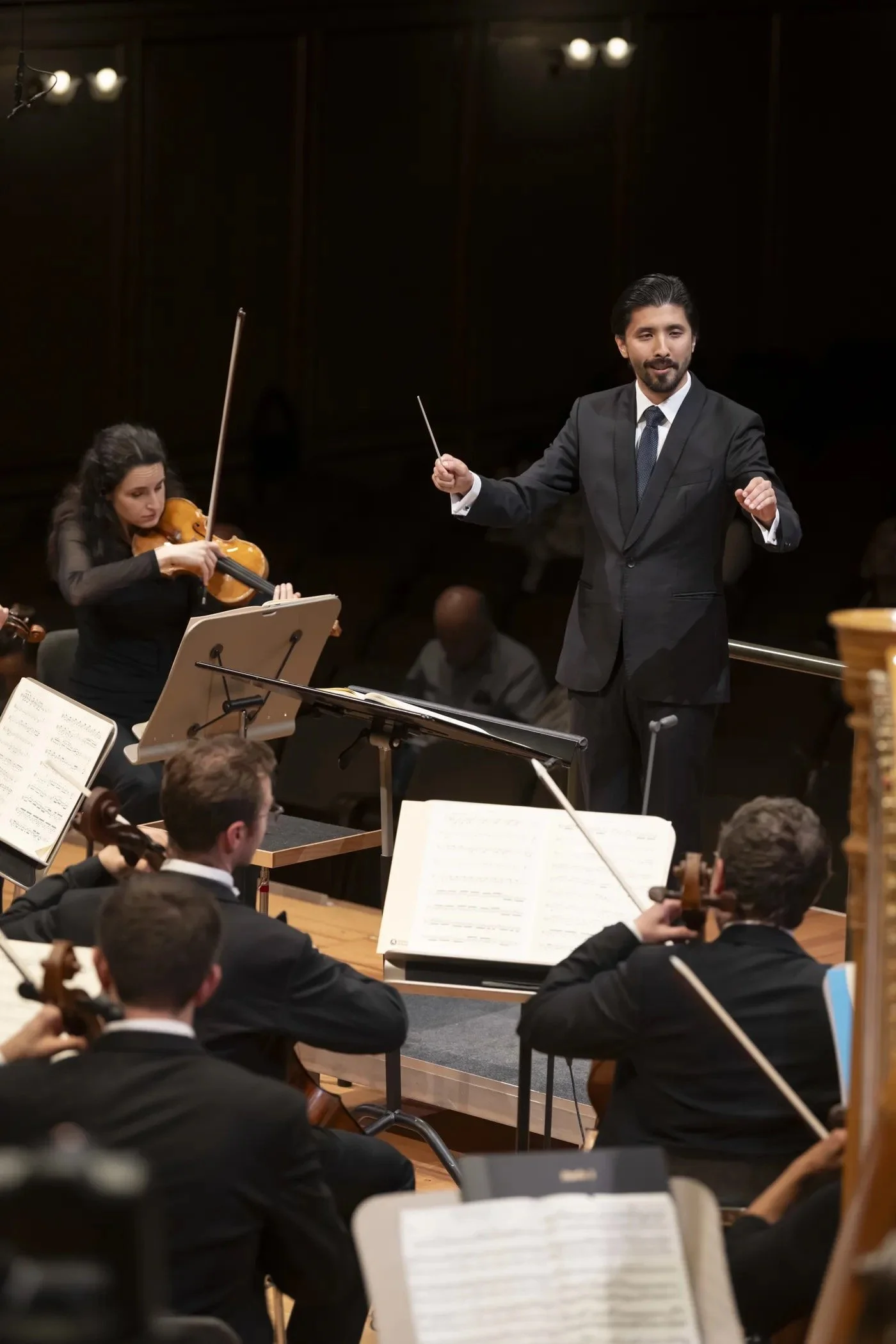
Working with young artists is something I care deeply about.
Your workshop on conducting during the festival offered participants a valuable opportunity to explore leadership in music. What were the key ideas or principles you wanted to share with young musicians?
It was particularly interesting because the participants came from very different levels of experience. One young conductor was already quite advanced, clearly experienced and accustomed to standing in front of orchestras, while another was approaching conducting for the very first time, simply curious about how it works. Others were somewhere in between. Because of this diversity, my approach had to be adapted to everyone, meeting them where they were in their own development.
However, the central principle I wanted to share with everyone was that conducting is not only about organization. Of course, the technical side – understanding patterns, entrances, coordination, and ensuring that musicians know where and when to play – is essential. Without that foundation, conducting cannot function. But this is only the beginning, not the final goal.
The true purpose of conducting is to shape how the music should sound. For instance, when conducting a well-known work such as Beethoven’s Fourth Symphony, the orchestra already knows the notes. What musicians want to discover is the conductor’s unique artistic vision: Who is this person? How does he or she want this phrase, this accent, this color to sound? This means that a conductor must not only study the score deeply and know exactly what they want musically but also develop a rich vocabulary of gesture capable of communicating those ideas clearly – whether an accent should feel sharp, warm, heavy, or lyrical.
For all participants, this connection between musical intention and physical communication was fundamental.
Conducting is ultimately not about controlling music in the abstract – it is about communicating with human beings who create that music. Without the musicians, there is no sound. Therefore, conducting is deeply human: it requires connection, clarity, and engagement.
One of the most important lessons I hoped to convey is that great conducting depends on human intelligence rather than mechanical precision. A conductor must truly engage with the players, establish direct communication, and inspire them moment by moment. Whether addressing a horn section, shaping a phrase, or guiding an entire orchestra, conducting is always about meaningful interaction. In the end, leadership in music is not simply about giving instructions – it is about creating trust, shared understanding, and artistic collaboration.
As both a performer and mentor at this festival, what has been your impression of the young artists?
For me, this has been one of the most moving aspects of the festival. Working with young artists is something I care deeply about, especially since I also teach pre-college students who are just beginning their serious musical journeys. There is something truly special about their spirit – their curiosity, openness, and willingness to learn.
What impressed me most here was how engaged they were. They asked thoughtful questions, were active throughout the process, and showed real courage in seeking answers. Some even asked very personal questions about artistic development and career paths – often the most difficult, but also the most important questions a young musician can ask. I deeply appreciated that level of sincerity and involvement.
It is important to remember that, although I may simply be a few years further along on this journey, we are ultimately part of the same artistic path. These young musicians are not just students – they are future colleagues. I can share my own experiences, challenges, and the decisions I made when I was their age, but before long, we will all be professional musicians sharing the same world.
That sense of continuity makes mentorship especially meaningful. It is not simply about teaching, but about supporting the next generation as they develop their own voices, their own artistry, and their own place within the musical community.
Emotions in music
Yesterday, during your concert you mentioned emotions in music. What different emotions do you recognize in the music you performed in yesterday’s repertoire?
There are many, of course. I think the first part consisted of three transcriptions is deeply spiritual in nature. For me, that is an essential dimension of this repertoire. In a way, I feel that music – regardless of one’s personal beliefs – connects us to something larger than ourselves. This sense of transcendence was very present yesterday, especially in works such as the Vespers line and other pieces that feel as if they come from another world. It is, in a sense, a search – a spiritual journey.
The Brazilian music, on the other hand, brings a very different emotional world. It is much more physical, dense, and grounded.
There is a strong connection to nature – Brazilian nature, which is deeply present in the culture, art, and imagination, from the Amazon to the rhythms of everyday life. Personally, I also feel very connected to that aspect, perhaps because nature plays an important role in my own life as well, including my passion for diving and exploring remote places. That sense of physical immersion is very present in the Brazilian repertoire.
Improvisation introduces yet another emotional dimension. For me, it is about immediacy and presence. While many emotions can emerge in the moment, the most important aspect is that it is alive – it is not fixed or pre-determined. It unfolds in real time, and that creates a strong sense of awareness and connection to the present moment.
And then, of course, Musorgsky contains almost everything emotionally. I feel that Pictures at an Exhibition can be understood as a kind of spiritual journey – moving through struggle, darkness, and confrontation with evil, through images such as the underworld, devils, and Baba Yaga, and ultimately toward redemption. For me, it is very much a journey toward light, toward a sense of arrival and transcendence.
For me, improvisation is really at the core of the musical experience.
〰️
For me, improvisation is really at the core of the musical experience. 〰️
To me, music is not only about reading a score correctly, but about truly „speaking” the language of music.
Improvisation played an important role in your concert, especially through the audience’s suggested themes. Yesterday, you improvised on two different themes, yet within those spontaneous creations one could hear influences of Bach, Chopin, and even jazz. What does improvisation mean to you as an artist, and which composers or musical styles inspire you the most?
For me, improvisation is really at the core of the musical experience. I think music is a very particular kind of art, because unlike painting or sculpture – where the work already exists as a finished object – the music does not exist until it is performed. Even when it is written down on a page, it only becomes alive through performance.
In that sense, interpretation itself already requires bringing music to life. When I perform a piece, I feel a bit like someone visiting a museum, such as the Louvre: my role as an interpreter is to present and share a work of art that already exists. However, the truly creative act in music lies in composing – and, for me, improvising is a direct extension of that creative process.
Historically, improvisation was a natural part of being a musician. It was expected that performers would be able to improvise. Over time, that practice has largely disappeared from classical music and migrated more into the jazz tradition, which I deeply admire. I sometimes feel a sense of loss about that development.
To me, music is not only about reading a score correctly, but about truly „speaking” the language of music. Reading notes is one thing, but understanding and owning the material allows you to go beyond the written page. It is a bit like learning a language: you can read it correctly, but that does not necessarily mean you can speak it fluently and expressively. In the same way, improvisation allows you to truly inhabit the music rather than simply reproduce it.
My own background also shaped this approach. I came into music quite naturally, through church music as a child. There, you often had to learn pieces quickly, sometimes play them in different keys, or adapt without a written score. That experience taught me early on that music is something flexible and alive, something you do rather than simply read.
I have been strongly influenced by that experience ever since. In terms of repertoire and inspiration, composers such as Bach, Brahms, Rachmaninov, and Chopin have been central in my musical life. Their language naturally finds its way into my improvisations. I also draw from jazz and bossa nova traditions, which remain important influences for me.
So, improvisation for me is not something separate from classical music – it is a way of reconnecting with its origins: a living, spontaneous, and deeply personal form of musical expression.
Today, we sometimes see pianists performing concertos while simultaneously leading or conducting the orchestra – a practice that, although rooted in historical tradition, has gained renewed attention in modern performance. In your experience, where does the role of the pianist end and that of the conductor begin? Is there a clear boundary between these two functions, or are they more deeply interconnected?
First, it is an incredibly enjoyable experience. I have done it myself, and it brings a unique kind of energy to performance. In fact, when I performed this way in Brazil, the orchestra musicians themselves were enthusiastic and even asked if we could do more projects like that, because it creates a very different atmosphere from the traditional soloist-conductor relationship.
That said, I believe this practice should never be approached simply because it appears fashionable or trendy. It must be done thoughtfully and with genuine musical purpose. Playing and conducting simultaneously is not just about performing the solo part and then making gestures during orchestral tuttis – it must make artistic sense. There are certainly situations where it works beautifully, but there are also works where the role of a dedicated conductor remains essential.
Ultimately, my philosophy is to be as minimal and effective as possible. The goal is not to impose unnecessary movement, but to facilitate communication and musical cohesion. When done with sensitivity, playing and conducting can become a highly rewarding artistic experience – but only when it truly serves the music itself.
For example, I would not approach every concerto this way. In large-scale works such as Brahms’s Second Piano Concerto, the musical and structural demands are enormous, and in many cases, having a strong conductor is invaluable. As Martha Argerich has wisely noted, when you have an excellent conductor, the pianist can fully focus on their own artistic contribution while trusting someone else to shape the orchestral framework. I completely understand and respect that perspective.
Therefore, leading from the piano should only be done when the pianist is truly confident that their conducting is genuinely enhancing the performance rather than merely adding visual effect. If it is done well, it can create a chamber music-like relationship between soloist and orchestra – one that many orchestras deeply appreciate because it fosters a more intimate and collaborative dynamic.
Ideally, the transition between pianist and conductor should feel completely seamless and natural. In some moments, conducting gestures are necessary and helpful; in others, they may be minimal or even unnecessary. Sometimes excessive conducting can become disruptive rather than supportive. For me, the key is restraint: every gesture must serve the music.
Different perspectives within the same musical language

For me, these identities are not separate roles, but different perspectives within the same musical language. They constantly interact, inform each other, and ultimately make my artistic work more complete.
As a conductor, composer, and pianist, how do these different aspects of your musical identity shape and enrich one another?
This is sometimes a difficult question for me, because I once had an interview where someone asked me how I would divide myself in percentages – as a pianist, composer, and so on – and said that I was „difficult to market” as an artist. At the time, I remember thinking it was a strange question.
I understand where it comes from, of course; in today’s world there is a need to categorize and define people clearly. But from the perspective of music itself, I do not really accept that kind of division. If you ask me in practical terms how I spend my time, perhaps at certain moments I am more focused on the piano, at others on conducting or composing. But in essence, I feel I am 100% all these things at the same time.
Naturally, if one activity were to prevent me from doing another at a high level, then that would be a problem that needs to be addressed. But when they are in balance, these roles enrich one another in very meaningful ways.
For example, as a conductor, my background as a composer and improviser allows me to approach a score not only as something fixed, but as something alive. I often ask why a composer wrote something in a certain way, and how it might function in a specific acoustic or with a specific orchestra. Sometimes that also means making practical adjustments to achieve the intended musical effect. I once discussed this with a student who was playing a piano transcription of Scheherazade, and I suggested we could even rethink certain elements of the arrangement based on how it would sound in orchestral terms. That kind of flexibility comes from understanding music from multiple perspectives.
Being a pianist also deeply informs my work as a conductor. Having spent countless hours practicing, I am very aware of what musicians go through – the physical and mental demands of preparation. That experience helps me relate more directly to the performers in front of me. I believe conductors who have never experienced that reality sometimes find it harder to fully understand the musician’s perspective.
At the same time, conducting has also influenced my piano playing. It has changed the way I hear sound, especially in terms of balance, structure, and orchestral thinking at the keyboard. I often imagine how I want something to sound in a larger space, as if it were part of an orchestral texture, and that has enriched my pianistic approach.
Finally, as a composer, it is invaluable to have direct experience of performance and rehearsal. Writing music becomes much more grounded when you understand how it functions in practice, not just in theory.
Having built your artistic career between Brazil and Switzerland, how have these two cultural environments influenced your musical language and professional development?
I think, if I’m very honest, Switzerland has been a wonderful place to further my career and to have opportunities to meet people who became very important to me – mentors such as Herbert Blomstedt, Paavo Järvi, Shervazidze, and my piano teacher.
At the same time, I don’t really feel that Switzerland has shaped me culturally or musically in a direct way. The more I reflect on it, the more I realize that at my core I am, in a sense, a Brazilian musician. Of course, I am a very mixed Brazilian – half Japanese, one quarter German, and one quarter Italian. It is quite an interesting combination of cultures.
But despite that mixture, I can safely say that I identify primarily as Brazilian. The German side of my family, however, had a particularly strong influence on me, especially musically. I came into music through my German grandmother, so from an early age I was exposed to a certain Germanic musical and cultural sensibility. In that sense, I feel somewhat close to the German-speaking world, but still more rooted in Germany than in Switzerland itself.
Switzerland, for me, is a very special place. It is almost like a base in the mountains – somewhat isolated, quiet, and removed from everything else. It gives me a sense of stability, a kind of refuge from which I can go out and explore the musical world.
In general, I often feel there are two approaches to performing music. One prioritizes pulse, rhythm, and structure; the other prioritizes sound and color. Some great pianists focus primarily on sound, sometimes at the expense of rhythmic clarity, while others are extremely precise rhythmically but may sacrifice sonic flexibility. The greatest artists, of course, find a balance between the two.
I think we often take for granted how special that kind of environment is. I have been living in Switzerland for about ten years now, and it is easy to forget how rare and carefully built such a context is. What they have achieved there, both culturally and institutionally, is remarkable. My work at the university with young musicians is something I deeply value, even though it is also very international in character. In a way, Switzerland functions for me as a safe base, a kind of refuge.
At the same time, when I listen to my own playing – especially in composers like Heitor Villa-Lobos – I can hear how naturally this Brazilian energy is present. Even in other repertoire, there is often a certain rhythmic vitality that I recognize as coming from that background. I think in Brazil this sense of rhythm is so deeply embedded that we don’t even always realize it ourselves. I became more aware of it through teaching and through my work in improvisation, where I constantly try to explain and systematize things that, in practice, often come very naturally. Of course, conducting also plays a role in this awareness. It helps me understand structure, rhythm, and flow in a broader sense.

Alexander Liebermann: Music is my primary means of self-expression
In this exclusive interview, his first for the Serbian-speaking audience, composer Alexander Liebermann talks about his creative process, fascination with birdsong, and the connection between music and science. Discover how he blends nature and art to create his unique musical world.
Interview with a composer Alexander Liebermann
Verzija intervjua sa kompozitorom Aleksandrom Libermanom na srpskom jeziku nalazi se na ovom linku.
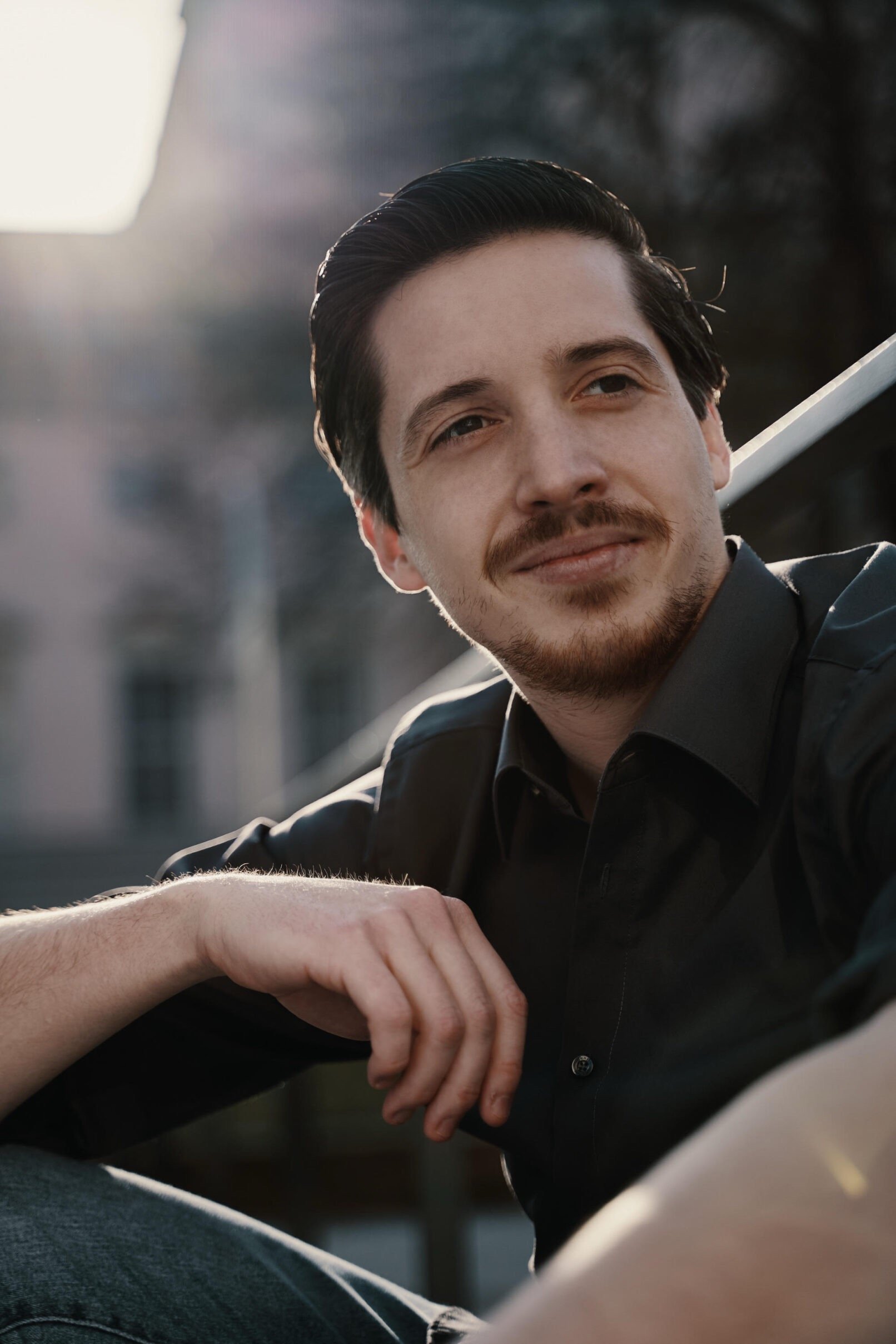
Alexander Liebermann, composer
Photo: alexanderliebermann.com
I first discovered Alexander Liebermann in 2022, thanks to The Best Classical Music Podcast. What immediately caught my attention about this incredible artist was his passion for animal songs, particularly bird songs. I vividly remember listening to him speak about music, his transcriptions, and the challenges he faces while transcribing, all during a bus ride between my hometown and the city where I live.
As a nature enthusiast, especially fond of birdsong—a love I inherited from another bird admirer, Messiaen—I was inspired to delve deeper into Liebermann’s music. I started exploring his work on YouTube and following him on social media. Nearly every week, he would share a transcription accompanied by an explanation of the unique melodies birds produce, and I’ve been captivated ever since.
When I launched my blog a few months ago, I knew I had to interview this extraordinary artist. I felt a strong desire to introduce his work to my friends and colleagues in Serbia. And so, here it is—my small contribution to spreading the word about the remarkable Alexander Liebermann.
It is known that you began transcribing bird songs during the COVID-19 pandemic. Recordings sparked your curiosity about animals and the sounds they produce. What challenges do you encounter when transcribing animal songs, and what fascinates you to continue exploring this field?
That's right. After spending a week in the Costa Rican nature, the Pandemic hit, and I found myself back in my childhood room in Berlin. Suddenly, I realized what incredible things I had witnessed (and more importantly, heard!) in that nature. That’s when I began to google the birds I had seen and to transcribe their songs.
What fascinates me about animal songs—particularly those of birds—is their astonishing complexity. When you attempt to transcribe their vocalizations into musical notation, you realize how intricate and complex they are. You are essentially listening to the culmination of millions of years of evolutionary refinement, and that’s both humbling and awe-inspiring.
Music is my primary means of self-expression
〰️
Music is my primary means of self-expression 〰️
You often mention that the musical notation we use for composing has many limitations when it comes to transcribing animal songs. What have you discovered during your transcription work that is specific to animal songs yet difficult or nearly impossible to represent in classical notation?
Of course, our current system of musical notation has its limitations. The Western system is remarkably precise and continues to evolve with each new generation of composers (Think about George Crumb's notation of the 'seagull effect'), but it may never fully capture the complexities of all birdsongs.
Nightingales, for example, are extremely challenging to transcribe. Their vocalizations have clear-pitched whistles, various non-pitched sounds, and lots of very clear overtones (and all of that happening outside the framework of our 12-tone system). This makes an accurate transcription nearly impossible to do.
Evoking Olivier Messiaen
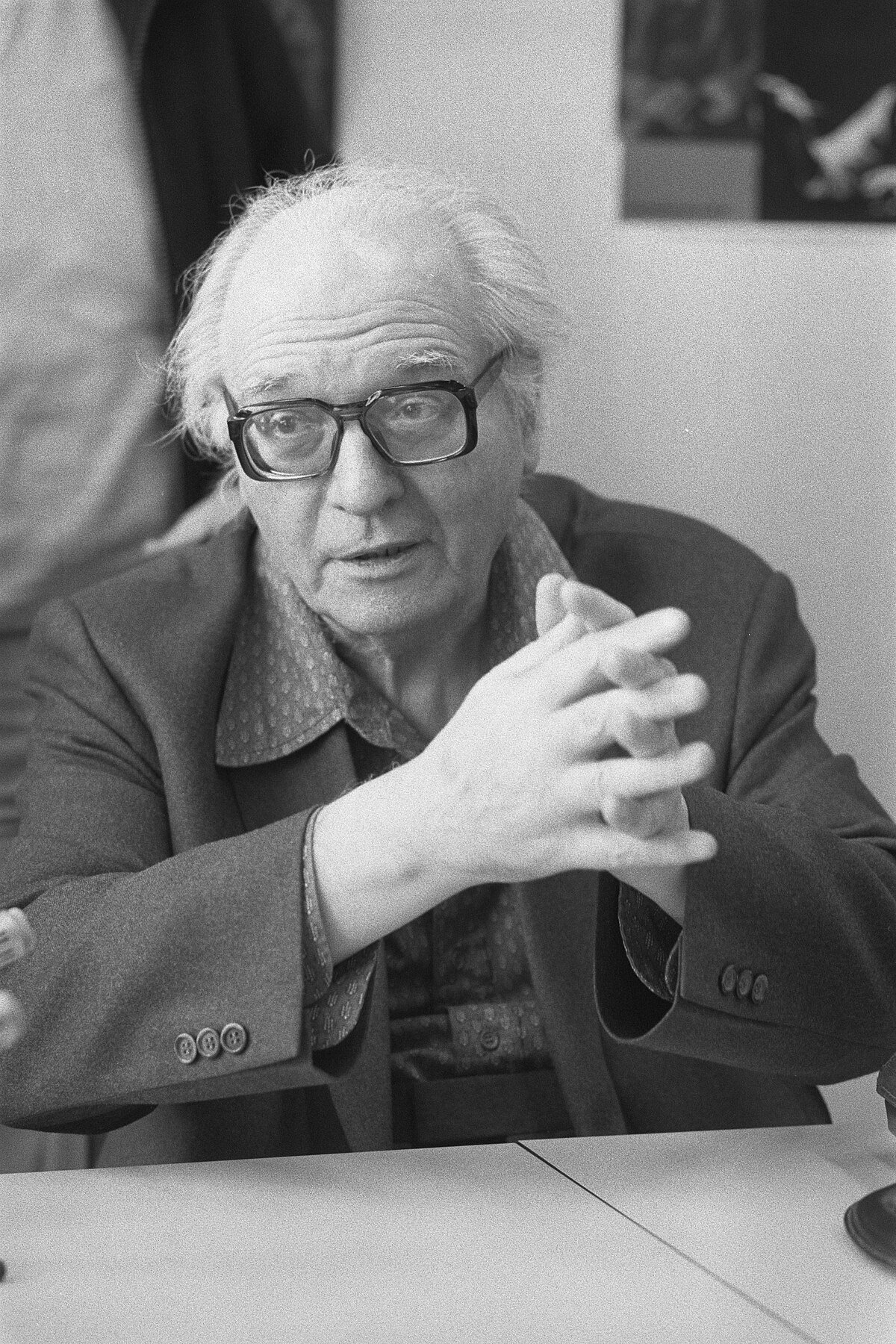
Olivier Messiaen: Composer of Sound and Color
Olivier Messiaen is perhaps the most famous composer for his journeys to tropical forests to listen to and transcribe the songs of various exotic birds. There is a wonderful documentary about him and his work called The Crystal Liturgy. Could you share what is unique about Messiaen’s transcriptions of bird songs? How does your approach differ from his, or are there similarities?
Messiaen is one of my favorite composers. I’m bummed because I was only three years old when he passed, and a part of me still feels there could have been a chance for me to meet him. I love his music, and I've spent time studying his transcriptions of birdsong, comparing them to those created by others, such as Hollis Taylor.
One thing that really struck me is the difference between how a composer transcribes birdsong versus how a musicologist/zoomusicologist approaches it. Messiaen, for example, seems to have transcribed through the lens of a composer, listening to the birds musically and imagining how their songs could be performed or integrated into his work. While that perspective is perhaps inevitable for composers, I try to approach transcription a bit differently by notating every single detail I can hear—and thus not worrying about whether it’s performable or not. Of course, having tools and software that allow me to slow down recordings has been a great help.
Messiaen believed that humans learned to sing and make music from birds. Does this idea make sense to you? Do you think nature has awakened humanity’s interest in music?
All I can say to that is that the etymology of the word composing comes from the Latin word ‘componere’, meaning "to put together." At its core, I believe everything is imitation. And through imitation, we develop and evolve.
Our species first appeared around 200,000 years ago, and some of the oldest known instruments are more than 35,000-year-old (like the five-finger flute made of bone discovered in what is now Germany). In the grand timeline of nature, this is but the blink of an eye ago. The sounds of birds and other animals from back then were likely quite similar, and certainly more abundant. Now imagine hearing a cuckoo—wouldn't you feel compelled to imitate it? I still respond to owls, imitating them whenever I hear them on summer nights. So, yes, it makes perfect sense that, in the beginning, we imitated the sounds (pitches and rhythms) that nature offered us.
Quaraçá for Wind Quintet is inspired by the song of the Uirapuru, a South American bird native to the Amazon rainforest.
The Birds’ Hidden Language
What have you learned or discovered so far about animal songs? What secrets do they hold? Are there any similarities between their music-making and human music?
I am still quite new to this field, but I have learned a great deal through reading and collaborating with scientists (primarily biologists and ornithologists). Books like The Bird Way by Jennifer Ackerman and Nightingales in Berlin by David Rothenberg have taught me not only about birds but also about the parallels with human music-making. Did you know that zebra finches learn their songs by memorizing and practicing? And male nightingales produce a specific sound that females find “sexy.”
In my work transcribing birdsong, I’ve discovered that the possibilities of pitch and rhythmic combinations are virtually infinite. In the songs of nightingales, I’ve encountered jazz-like licks and pitch sequences reminiscent of famous musical themes. On the other hand, blackbirds and Blyth’s reed warblers sing almost perfect triads and seventh chords. It’s truly amazing when you think about it.
What fascinates me about animal songs—particularly those of birds—is their astonishing complexity.
Your body of work includes a significant number of compositions. Listening to them and trying to identify your unique musical expression, I noticed that your music often feels picturesque, descriptive, and inspired by representations of the world and nature. How do you overcome the limitations of instruments in your compositions when trying to imitate the natural phenomena that inspire you?
That’s a great question, and it’s something I’m still grappling with. I tend to be a bit conservative when it comes to orchestration and melody. However, the sounds created by birds (and other animals) can be so ethereal that they demand new instruments and a completely different approach to orchestration. It’s a real struggle for me because I want to be able to imitate or recreate these sounds using a more traditional orchestra.
In a recent piece I composed, I implemented the call of a red-tailed hawk into the orchestral texture. The call sounds like white noise, but I think I managed to imitate it quite well using the traditional orchestra. Keep it between us, but it involved high string harmonics in a dense cluster, along with an incredibly high piccolo flute.
Music and nature
Liebermann’s compositional oeuvre spans dozens of works for various instruments and ensembles. From solo music and choral pieces to chamber and orchestral works, his versatility as a composer is remarkable. Notably, he also composed music for the film Frozen Corpses Golden Treasures.
A defining feature of Liebermann’s music is his integration of bird songs into many of his compositions. However, his work extends beyond this, as he is deeply committed to exploring the connection between music and science. A standout example is a piece that emerged from his collaboration with biologist Professor C. Loren Buck from Northern Arizona University. Together, they aimed to musically represent the annual cycle of Arctic ground squirrels—extraordinary creatures that hibernate for over half a year with body temperatures dropping below freezing. Through this composition, they sought to capture the essence of the squirrels’ existence while drawing attention to the growing threats these animals face due to global climate change.
I believe that making music an interdisciplinary field is crucial for the 21st century.
You are of French and German origin, yet you have been living and working in the United States for quite some. Could you describe how American musical traditions have influenced your compositional style compared to European traditions? Are there distinctions, and how do they relate to your work?
I studied at the Music University “Hanns Eisler” in Berlin, majoring in music theory and jazz composition. While I aspired to write “serious” music like the composers in the contemporary composition division, I didn’t want to follow the experimental and "Neue Musik" style that dominated the scene. Feeling out of place, I decided to leave for the US to study with Samuel Adler and Steven Stucky at Juilliard. There, I noticed that the musical language of all the students was eclectic (in the good sense of the word!), and that was truly refreshing to me.
In Germany, I felt that writing melodies was not considered a serious way of composing. While that may not be the case anymore, at the time it certainly felt that way. Melodies are important to me, and they are never entirely absent from my compositions. I often reference Messiaen’s words on this subject. In 1944, he wrote about his own musical aesthetic:
“With the awareness that music is a language, we will first strive to let the melody ‘speak.’ The melody is the starting point. It must remain sovereign! […].”
That said, I also have a deep appreciation for atmospheric and ambient music, and in recent years I’m finding myself more and more drawn to experimental music. Let’s see where this takes me.
Melody and noise
What does music, and your compositions in particular, mean to you considering the inspirations that drive your creative process?
Music is my primary means of self-expression. However, as a naturally curious person, I also use it as a tool to explore various subjects. While I certainly write pieces inspired by birds, I’ve also composed about topics such as climate change, history, and other animals like arctic ground squirrels. For the latter, I collaborated with scientist C. Loren Buck, using his data to shape the form of the piece. I believe that making music an interdisciplinary field is crucial for the 21st century—it can not only reach a broader audience that way but also serve as an effective educational tool.
Considering that music can be “captured” from everything around us, how can we distinguish between melody and noise?
Ha-ha! That’s a tricky question. First, melody is not the opposite of noise. A "melody" (and define melody) could be considered "noise" by some. And then, what exactly is music? I’ve spent a lot of time reflecting on this over the years, and the truth is, there’s no single, universally accepted definition. (For fun, try looking up the definition of music in different countries!)
However, there are two definitions that resonate with me. The first is a more philosophical and pragmatic definition by Andrew Kania:
“Music is (1) any event intentionally produced or organized (2) to be heard, and (3) either (a) to have some basic musical feature, such as pitch or rhythm, or (b) to be listened to for such features.”
And then there is the more “romantic” one, as given by David Rothenberg:
“Before music, sound is sound. After music, sound is still sound, but our feet are walking a few inches above the ground.”
Ultimately, I believe it’s up to the listener to decide what qualifies as music, and therefore to distinguish between melody and noise. To me, both melody and noise are integral parts of what music is.
Birdsong: A Musical Field Guide
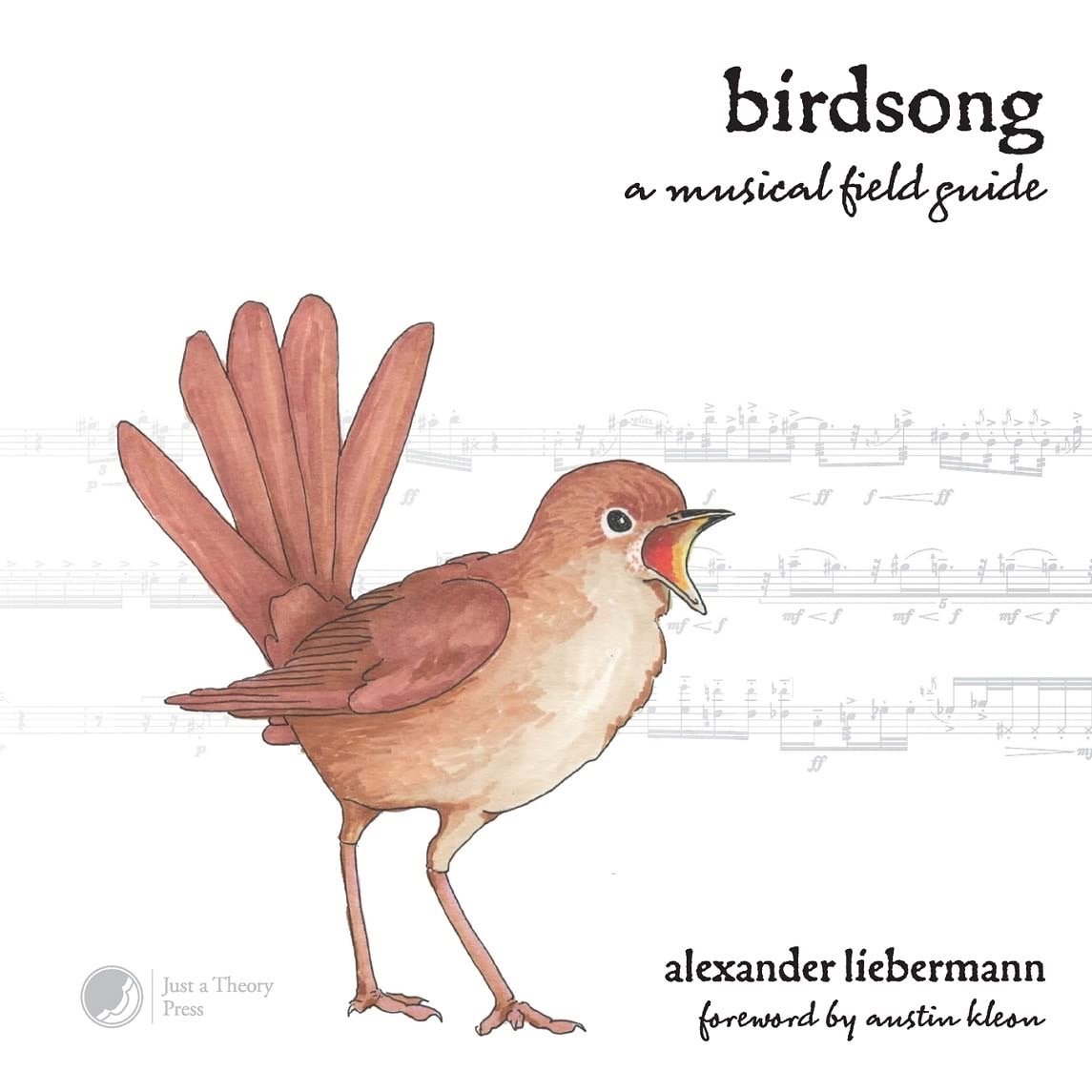
Another fascinating aspect of Liebermann’s work is his book Birdsong: A Musical Field Guide.
This book is a treasure for both musicians and nature enthusiasts, featuring highly accurate transcriptions of birdsong. It includes beautiful illustrations of each bird species, created by artist Anna Schiller, along with QR codes that link directly to the original videos. This allows readers to listen to each bird’s song while following the music, creating an immersive and educational experience.
Erwin Schulhoff – A Composer of Many Faces
Your doctoral dissertation focuses on the Austro-Czech composer and pianist Erwin Schulhoff. What drew you to research Erwin Schulhoff, and what unique aspects have you discovered in his compositions?
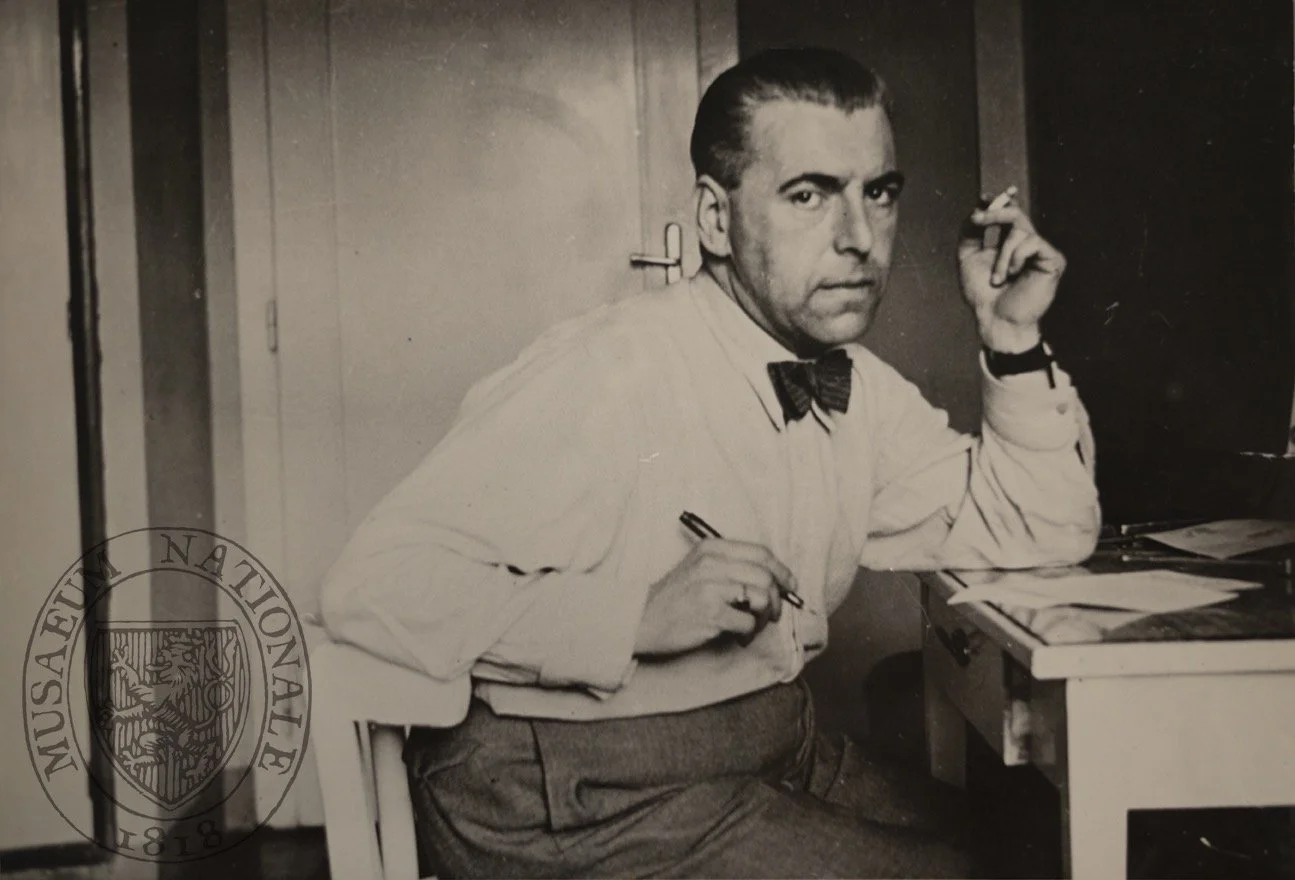
Erwin Schulhoff, composer
He was passionate about all kinds of music, exploring Post-Romanticism, Dadaism, French and German Expressionism, and even jazz!
I absolutely love Schulhoff’s music. Not only is the music from his string sextet one of my earliest musical memories, but I also feel a deep connection to him. Let me explain. First, Schulhoff was German-Czech and grew up with the internal dichotomy of not quite knowing where he belonged. This is something I can relate, with my own French-German roots.
Secondly, Schulhoff lived during a time when genres and musical styles were exploding. He was passionate about all kinds of music, exploring Post-Romanticism, Dadaism, French and German Expressionism, and even jazz! It must have been overwhelming to live through such a transformative time. Schulhoff embraced many of these styles and eventually succeeded in creating his own unique musical language by assimilating elements from the ones he liked most.
Today, we face a similar situation. We are surrounded by so much music, and we can listen to everything, everywhere, all at once. I love Debussy and Ravel, but I also have a passion for J.J. Cale and even AC/DC. The list is endless. So why wouldn’t I incorporate uplifting beats into my music, or a power chord here and there? I’m still working through this, but Schulhoff is a huge influence and inspiration in that regard. That’s why I wrote my doctoral thesis on his music.
Which part of his oeuvre do you consider the most innovative, and why?
To be honest, I don’t know if his work is that innovative, and that’s perfectly okay. What matters most is that whatever he wrote, he wrote well—really well! It is good music and I listen to it frequently. What more could a composer wish for than to have the next generation of musicians and composers listen to and be inspired by their work?
That said, if there is one piece that is truly groundbreaking, it is probably the Five Pittoresques from 1919. It is one of the first classical compositions to incorporate jazz elements throughout (with only Stravinsky’s Piano Rag beating Schulhoff by a couple of months). Additionally, the piece features a movement made entirely of silence, and that 33 years before John Cage’s 4'33!
Please check out his music. For starters, I recommend the Hot sonata, the String Sextet, and his Five Pieces for String Quartet.
Alexander Liebermann, in a few words
Alexander Liebermann is a German-French composer of classical music, whose acclaimed works are characterized by an eclectic blend of diverse topics such as philosophy, biology, astronomy, and other fields. Among his most recent commissions are a climate-change-reflecting monodrama written for the Deutsche Oper Berlin, a birdsong-inspired wind quintet for the Brazilian Winds Ensemble, and a soundtrack for the documentary film Frozen Corpses Golden Treasures.
As a passionate nature enthusiast, Liebermann spends much of his time studying the sounds of wildlife. He is known for his original and accurate transcriptions of animal vocalizations, which have gone viral on social media and been featured in the world-renowned magazine National Geographic. These transcriptions have also earned him invitations to international congresses in Colombia and Brazil, as well as a feature on CBS Sunday Morning. Liebermann is the author of Birdsong: A Musical Field Guide, a book that offers a unique perspective on the musicality of birds and their relationship to human music-making.
Liebermann holds degrees from the Hanns Eisler Music Conservatory, the Juilliard School, and Manhattan School of Music. For his thesis on Erwin Schulhoff, Liebermann was awarded the Saul Braverman Award in Music Theory. Liebermann currently resides in New York and serves as a faculty member for music theory and ear training at Juilliard’s preparatory division Music Advancement Program.