Maja Rajković: Liebesnacht brings together two of the most beautiful themes – music and love
Conversation with pianist Maja Rajković ahead of the musical-narrative evening Liebesnacht, where she will perform works by Richard Wagner
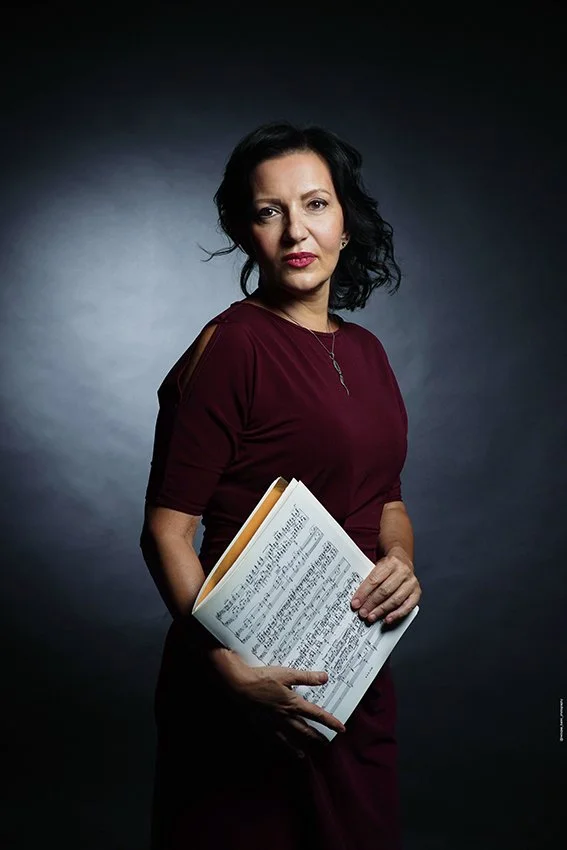
Maja Rajković, piano
Photo: Nebojša BabićThe internationally renowned pianist Maja Rajković is a full professor at the Faculty of Music in Belgrade.
On Sunday, May 24 at 7 p.m. in the Hall of the Belgrade Philharmonic, she will take part in a musical-narrative evening authored and narrated by writer Slava Vlasov, a great admirer of Richard Wagner’s music.
In this conversation, Maja shares her thoughts and impressions of Wagner’s music and reveals hidden musical secrets translated from the orchestral sound of Wagner’s operas into piano texture.
For me, the challenge is above all to evoke, through the piano, the atmosphere, emotional tension, and inner motion present in this music.
She gave her first piano recital at the age of fourteen. She has performed with orchestras such as the New Jersey Capital Philharmonic Orchestra, the Symphony Orchestra of the Astana Opera, the Belgrade Philharmonic Orchestra, the RTS Symphony Orchestra, the St. George Strings, the Dušan Skovran String Orchestra, and others.
She has participated in festivals in her home country, the region, and abroad. She has given concerts in Serbia, Italy, Germany, England, the USA, France, Greece, Portugal, Croatia, Hungary, Luxembourg, Kazakhstan, and many other countries.
Throughout her career, Maja Rajković has received significant awards for her artistic work, including the Silver Medal of the University of Arts for outstanding artistic achievement on the concert stage, the Performer of the Year award presented by the magazine Muzika Klasika, the Aleksandar Pavlović award of the Association of Composers of Serbia, and others.
In search of a balance between monumentality and intimacy
You perform a series of demanding Liszt and other piano transcriptions of excerpts from Wagner’s operas - from Isolde’s Liebestod to Forest Murmurs from Siegfried. How do you approach transferring Wagner’s monumental orchestral and dramatic language to the piano, and what do you consider the greatest interpretative challenge in that process?
Wagner’s orchestral language is so rich, multilayered, and dramaturgically powerful that it is neither possible nor desirable to simply imitate the orchestra on the piano. For me, the challenge is above all to evoke, through the piano, the atmosphere, emotional tension, and inner motion present in this music, as well as the sonic color of everything it expresses. These transcriptions are fascinating precisely because they are not mere piano reductions of orchestral scores, but a deeply pianistic and artistic vision of Wagner’s world. The greatest interpretative challenge lies in finding a balance between the monumentality of this music and its intimate nature.
Wagner’s music carries a strong emotional, philosophical, and dramatic charge. When did you first discover his musical world, and how did it shape your artistic sensibility?
My first more serious encounter with Wagner’s music was through Liszt’s transcription of Isolde’s Liebestod, which I had performed earlier. However, it was only through this project and my collaboration with writer Slava that I began to enter more deeply into that imaginary and emotional world. I discovered an entire magical universe filled with longing, inner drama, tenderness, darkness, and a particular kind of transcendence. For me, this opened a new artistic and emotional space.
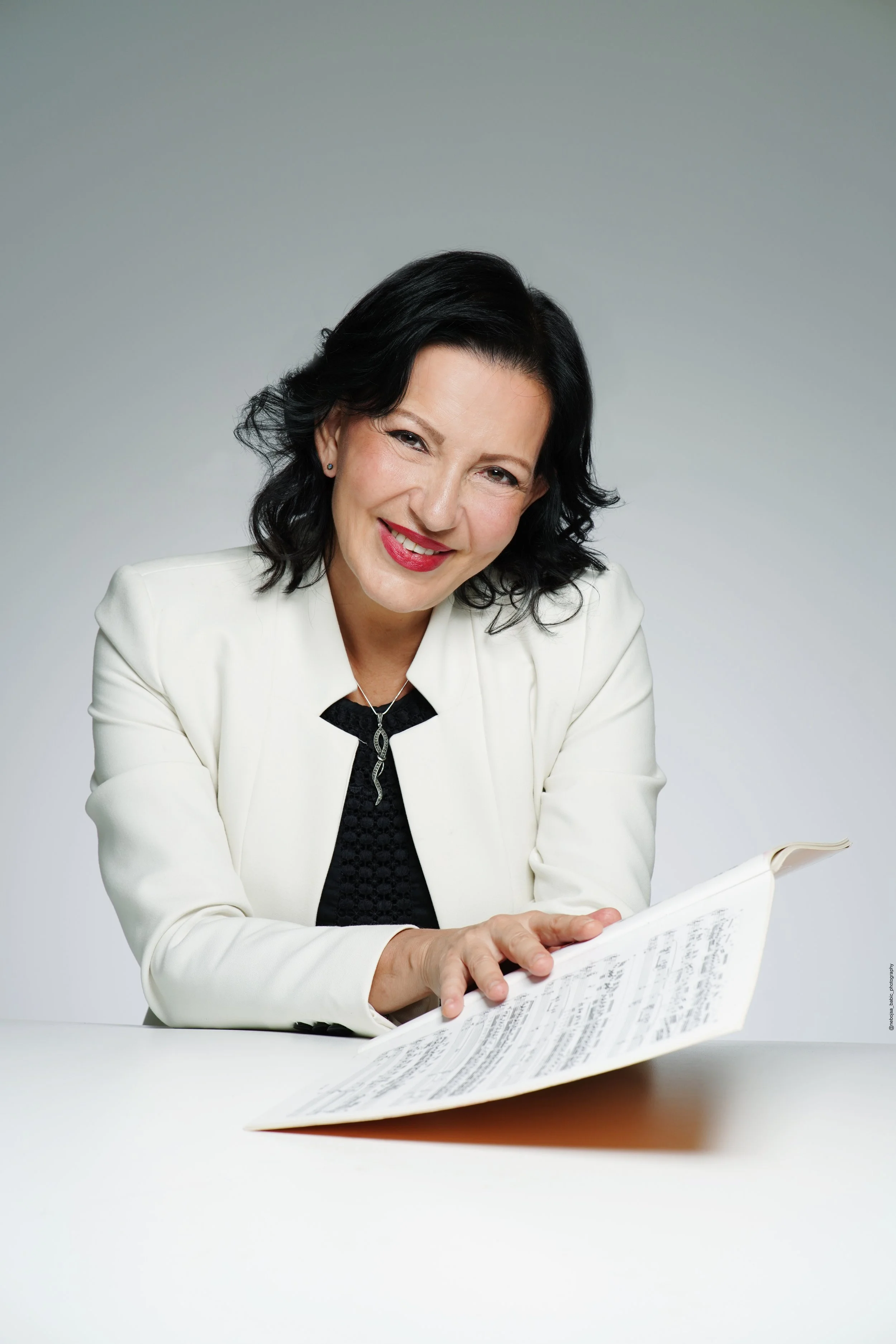
I approach this music less intellectually and more intuitively and emotionally.
Photo: Nebojša BabićLiszt’s transcriptions of Wagner’s works often require a combination of virtuosity and deep introspection. How do you balance technical brilliance with the need to preserve the essential dramatic and poetic dimension of Wagner’s music?
In Liszt’s transcriptions of Wagner’s music, I do not perceive virtuosity as an end in itself. The technical complexity exists to enable a breadth of sound, orchestral color, and a large emotional arc.
If one focuses only on brilliance, the essence of the music is lost. For me, it is much more important that the inner drama, the breathing of the phrase, the tension, and the poetry inherent in Wagner’s music are felt through the piano. Only then does technique become a means of expression rather than a display.
In addition to Liszt, many other composers also created transcriptions of Wagner’s music, including Hans von Bülow and Louis Brassin, whose transcriptions I will also perform within the Liebesnacht program. All these transcriptions reveal a wide spectrum of approaches and styles in adapting Wagner’s music for piano. They differ significantly from one another. Some are arrangements of instrumental and orchestral passages from Wagner’s operas, others are transcriptions of arias in which the piano literally sings the vocal line while simultaneously rendering the orchestral accompaniment, and some are combinations of various elements with a fantasial character, not representing a literal arrangement of a specific operatic excerpt but rather a fusion of multiple fragments. It is precisely here that the creativity of the transcriber becomes most apparent.
Friendship turning into music.
〰️
Friendship turning into music. 〰️
Franz Liszt and Hans von Bülow were close friends of Richard Wagner, deeply connected both in their private lives and as lifelong advocates of his music. Both composed entire collections of transcriptions of his works. It is particularly fascinating to perform their interwoven creative output, in which one can sense the intertwining of music, friendship, and artistic ideas. Wagner was married to Liszt’s daughter, who had previously been married to von Bülow. Their lives were thus deeply interconnected on multiple levels, and at the center of it all stood the most powerful force that bound them together – music.
The characters in Wagner’s operas seem to reflect their real lives and emotional entanglements as well. On a human and emotional level, this cannot but affect the performer, and during preparation one has the feeling of being immersed in a cloud of that world – at once unreal and completely real, but in any case, utterly fascinating.
Love, longing, and inner drama
The Liebesnacht program illuminates Wagner through love, longing, and inner drama. How do you personally build your relationship with this music, and what would you like the audience to experience through your performance?
I approach this music less intellectually and more intuitively and emotionally. What fascinates me in Richard Wagner is the constant intertwining of intimacy and immense emotional power, of dreamlike states and drama. I would like the audience, through my performance, to feel precisely this entry into a different world – to step away from everyday reality for a moment and surrender to imagination, emotion, and the inner images that this music so powerfully carries within itself.
Wagner’s music is often described as inaccessible and difficult to listen to. Do you share that impression as an interpreter? Have you had the opportunity to hear audience reactions to his music after your performances?
I think Wagner can seem inaccessible when one listens to him superficially or without context, because his music requires time, concentration, and emotional surrender.
But once you enter that world, an enormous richness of colors, emotions, and inner meanings is revealed. My experience has been the opposite of the stereotype of difficult Wagner. The audience has reacted very emotionally to these transcriptions and often told me that, through the piano, they experienced his music in a much more direct and intimate way than through opera.
The fusion of music and love

I most often perform works from the Romantic period and the first half of the 20th century, because the expressive possibilities of the piano are fully realized in them.
Photo: Nebojša BabićYour piano repertoire mainly includes works from the Romantic period, yet you also perform music by Serbian composers. How does Wagner’s musical poetics – although not originally written for piano – differ from the Romantic composers whose works you most often play? What do you find new and challenging for your pianistic expression in his music?
I most often perform works from the Romantic period and the first half of the 20th century, because the expressive possibilities of the piano are fully realized in them. However, I equally enjoy performing polyphonic works from the Baroque period, as well as music from other stylistic eras. I have performed many works by Serbian composers, as well as contemporary music. A special place in my work belongs to chamber music and collaborative piano playing, as making music with others brings me particular joy.
Before becoming a professor of piano at the Faculty of Music, I worked for many years at the Vocal Department of the same faculty as a piano collaborator. During that time, I worked with many outstanding singers and became deeply familiar with vocal literature – both art song and opera. While accompanying singers, I often found myself wishing that I, too, could sing their arias. I tried to transfer their voice and timbre into the sound of the piano.
Through these transcriptions, that wish to sing arias on the piano has been fulfilled.
My second wish was to conduct, something I have never had the opportunity to experience, but these transcriptions allow me, through the piano sound, to both sing and conduct the orchestra at the same time. That is what I find incredibly exciting and inspiring – I can spend hours, days, and weeks exploring the colors of the piano sound and the ways in which music can flow, becoming as melodic and expressive as a singing voice, while at the same time remaining firmly organized, like an orchestra in Wagner’s music.
Slava’s dedication to music and writing can be an inspiration to many.
〰️
Slava’s dedication to music and writing can be an inspiration to many. 〰️
What is your personal impression of the entire program of the musical-narrative evening Liebesnacht, and how would you present it to the audience?
I would like to invite our audience to this musical-narrative evening, which is not coincidentally titled Liebesnacht: it brings together two of the most beautiful themes – music and love.
The program begins with the story of Richard Wagner’s unfulfilled love for Mathilde Wesendonck, which left a profound mark on his life and directly led to the creation of the opera Tristan und Isolde. The first part of the concert concludes with Liszt’s transcription of Isolde’s Liebestod.
The second part presents music and stories about the love of Lohengrin and Elsa, Wolfram and Elisabeth, Siegmund and Sieglinde, and concludes with Forest Murmurs from Siegfried. In the final number, the Forest Bird sings to Siegfried about a beautiful woman who sleeps on a rock surrounded by fire and who can only be awakened by the one who knows no fear. Forest Murmurs ends with Siegfried, filled with excitement and joy, following the bird that leads him directly to Brünnhilde – a moment of the approaching union of love and destiny.
This format of the musical-narrative event was conceived by the writer Slava Vlasov, who came to Belgrade last summer and brought a new wind and a new sound into the city’s musical life, opening a different way of experiencing music through stories and imagination. Slava’s stories and his way of presenting them help the music fully reach the listener.
For me, this concept is particularly inspiring. I believe it brings something new, playful, and alive, while at the same time offering authentic details from the lives of composers, which writer Slava Vlasov revives as if they were present with us in the moment. Wagner thus becomes a living human being before us, with all his virtues and flaws, no longer a solemn, monumental figure viewed as a monument. These are often quite ordinary, humorous stories that open a closer and more human perspective on his world.
Slava’s dedication to music and writing can be an inspiration to many, as it shows how art can be lived and shared with others through personal passion and commitment.